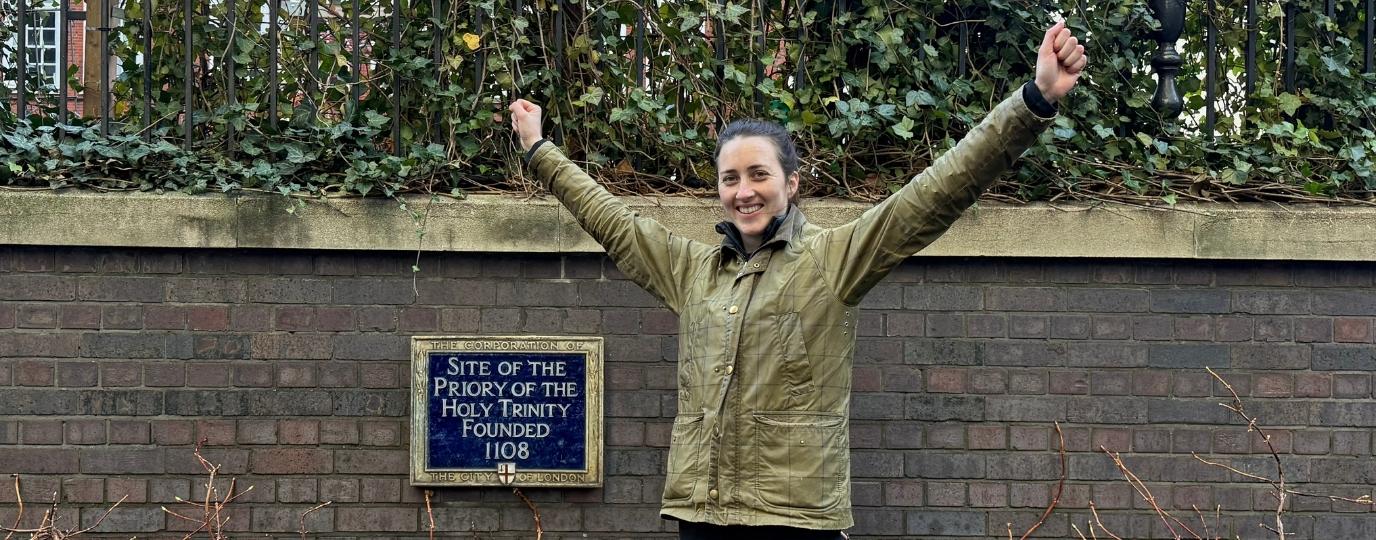
In her new book, Historian Alice Loxton shares the story of a 200 mile walk retracing the funeral route of Queen Eleanor of Castile. In this post she explores how the ancient tradition of pilgrimage is finding new meaning today. From sacred wells to ‘thin spaces’ where the veil between worlds feels fragile, Alice reflects on why modern pilgrimage is more than a walk: it’s a practice of intention, transformation, and connection with the land and its stories.
What is a Pilgrimage?
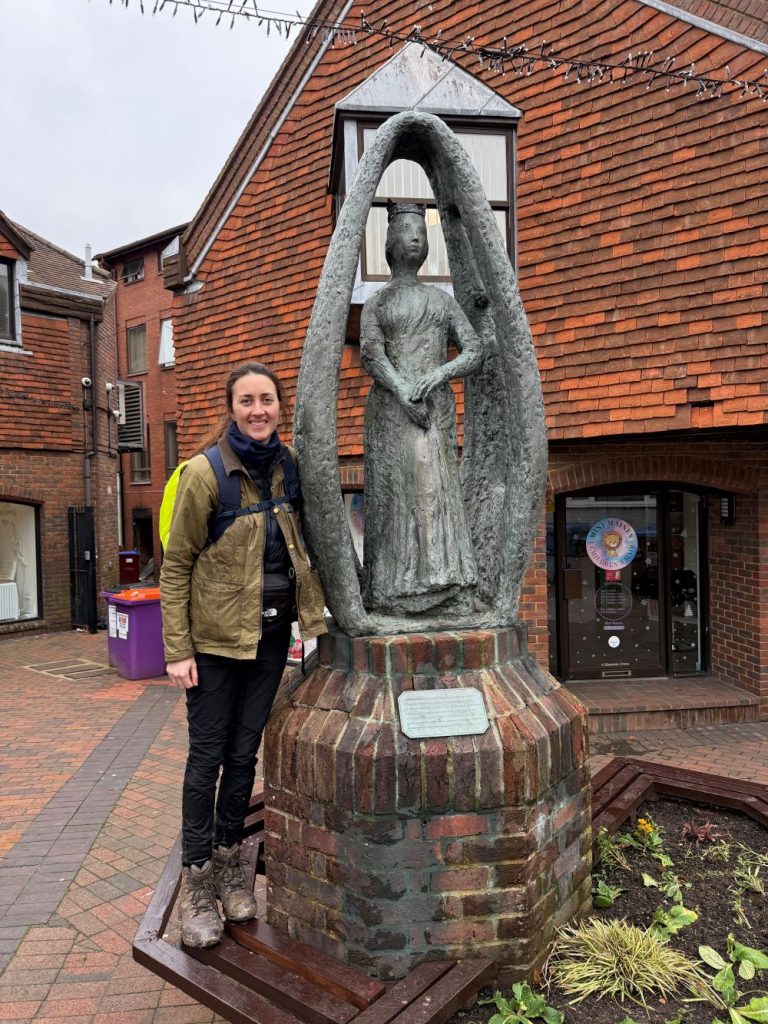
On the way to Dunstable I was joined for a day by Dr Guy Hayward, who runs the British Pilgrimage Trust, a charity that celebrates the ancient practice of pilgrimage. Like monasteries, abbeys, saints’ days, confession and mass, pilgrimage was a major part of English medieval life, but all these things were removed in the Reformation. Pilgrimages were banned by an Act of Parliament shaped by Thomas Cromwell in 1538 and the practice never really picked up again.
It is Guy’s mission to revive this lost practice. But what does a pilgrimage look like in the modern world? For Guy, it’s a broad term, where pilgrimage is a practice, not a belief system. It can be spiritual or simply an act of walking in the footsteps of our ancestors, visiting sacred locations – cathedrals, ancient trees, river sources, holy wells, standing stones.
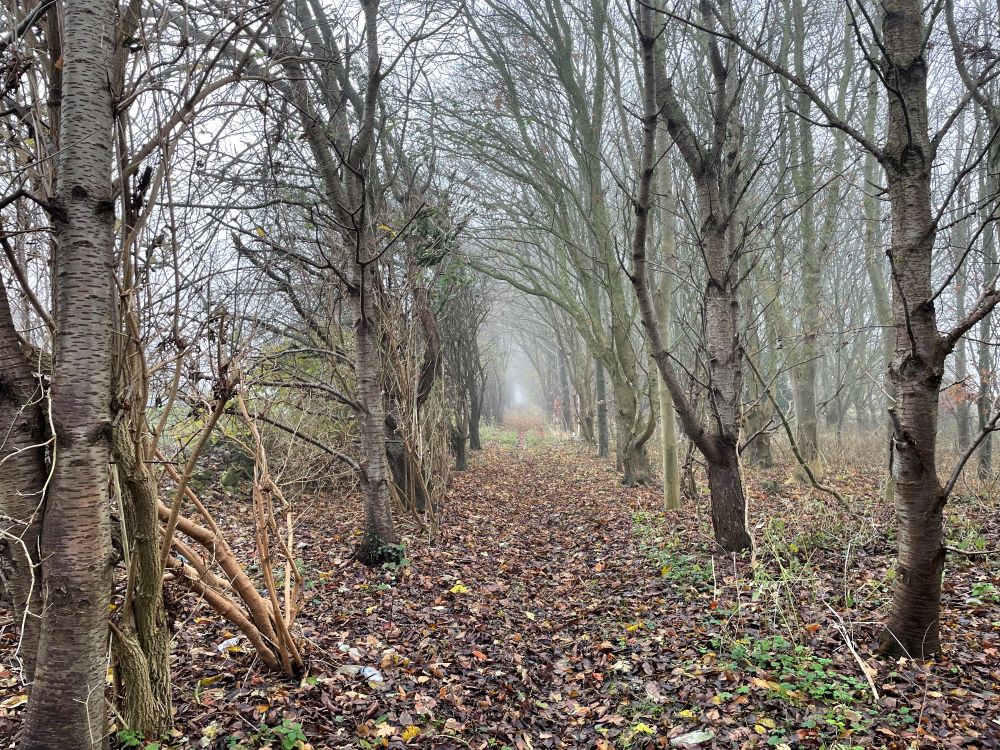
‘All you need to be a pilgrim is good intentions and a heart open for transformation,’ Guy explained as we strolled along the lanes. ‘Pilgrimage is not about how far you travel, but about how deeply you travel.’ It’s different to a walk, because you’re opening yourself up to experience the unexpected, heading towards an unknown destination. Tourists come with expectations, but pilgrims are open to what the journey will show and grow in them. Walking is for the body; pilgrimage for the soul.
In medieval times, the destination was even more unknown than now, where our phones show us photos of the destination before we see it in real life. But aside from the physical end point, the true unknown destination is the person we become, transformed by changes within. ‘Pilgrimage can be a process of days or months or even years,’ Guy told me, ‘but you can also make a pilgrimage in a matter of hours.’
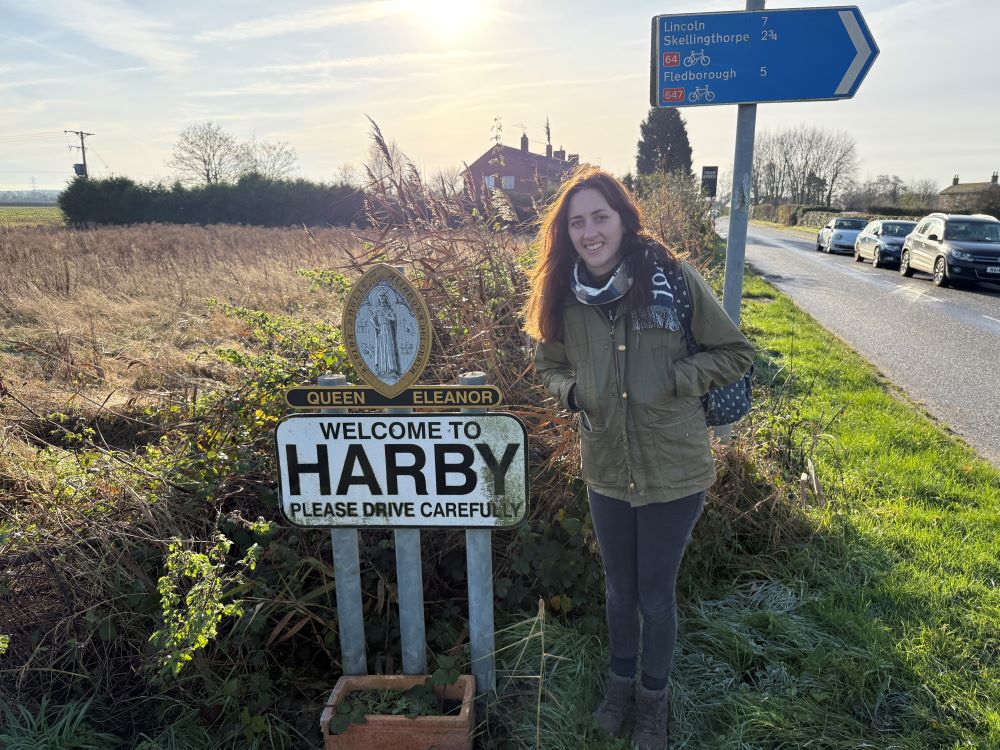
My walk, from Lincoln to London, seemed to have all the characteristics of a pilgrimage.
- Following the footsteps of ancestors. Tick.
- In memory of a person. Tick.
- Being open to experiencing the unexpected. Tick.
- Passing sacred places. Tick.
- Making friends with deans. Tick.
- Ending up at a shrine. Tick.
Guy’s sense for the divine was obviously pretty powerful, because we came across a sacred space within only a matter of minutes. An innocuous-looking pond, beside which – among long reeds – was a sign. This was the site of ‘The Chapel over the Pond’, a Methodist chapel that stood, on stilts, raised up above the village pond, from 1861 until 1981. A timber building with a slated roof, it could seat up to fifty people. ‘During its life,’ I read aloud from the plaque, ‘the Chapel was maintained meticulously with loving care by the villagers who ensured that the pews were kept beautifully polished and the wooden floor scrubbed white. Very often, the sound of ducks under the Chapel accompanied any worthy sermons and hymn singing.’ There was no explanation of the obvious question: why was the chapel built on stilts, on water, rather than the perfectly good ground nearby? A planning issue? Or an attempt to rival our Venetian friends?
Nonetheless, the plaque continued: ‘Many happy memories of this Chapel and the spirit of the departed generations are held by families in the village.’ How lovely it was to gaze at the still waters, imagining the years of joyful hymn singing, accompanied by quacking and splashing, which once filled the air. ‘You see,’ Guy said, ‘pilgrimage is full of surprises!’ As we walked, sharing the space with that ‘spirit of the departed generations’, as the plaque put it, Guy explained another concept. ‘Thin spaces’ are spots that hold spiritual significance: a parish church, a long barrow, a stone circle. Here, some people believe, the veil between this world and the sacred world is ‘thin’ – where the walls of the world are weak and there is little barrier between heaven and earth. It’s in those places where you feel a spine-shiver of something beyond words – something transcendent or perhaps divine. Perhaps it was the kind of spiritual otherworldliness that Mahatma Gandhi described: the ‘indefinable, mysterious power that pervades everything’.
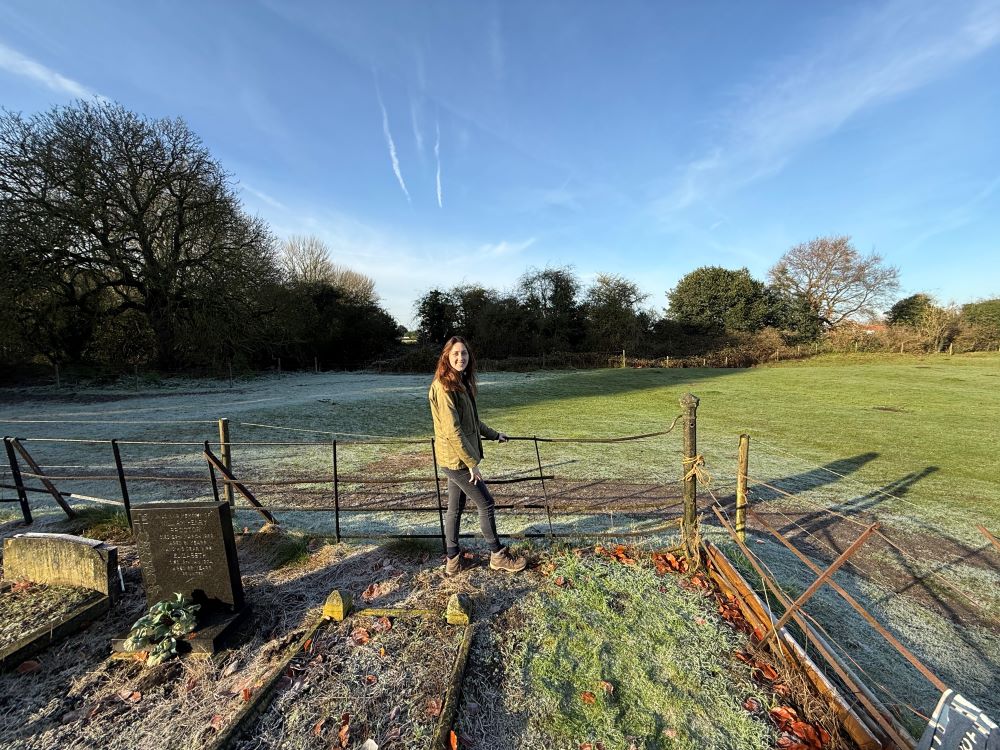
Another important part of pilgrimage, Guy explained, is the act of being physically in a place. Not just reading a book about places or watching a video, but standing with feet on the ground, breathing in the fresh air. To discover the spirit of a place, to get a feel for people – and, in turn, see how you slot into the picture – boots on the ground is of vital importance.
Walking is brilliant for that: hours and hours to take in the landscape, to gaze at the skies. Your mind is free to become bored, to aimlessly wander – to notice tiny, unexpected details that the motorist or cyclist might speed by. It also allows you to travel at a pace that links humankind across time and space – by foot.
Pilgrimage isn’t just about reaching a destination, it’s about the stories, surprises, and transformations along the way. Read more about Alice Loxton’s full exploration of the Eleanor Crosses and the footsteps they trace through time: Walking History: Alice Loxton on the Trail of the Eleanor Crosses.

By Alice Loxton
Alice Loxton is a historian, presenter and Sunday Times bestselling author with over three million followers on social media. Find more about her and her books here Alice Loxton