
Best island beaches in Britain
What makes island beaches special isn’t just their beauty, but the freedom to choose between very different beaches without travelling far. On a single island you might find wide, pale sands backed by dunes and machair; shallow, shell-sand bays lapped by turquoise water; quieter coves reached on foot where footprints fade almost as soon as they’re made; and longer, open beaches where Atlantic swells roll in under big skies.
This post is written by OS Champion Lisa Drewe who is currently undertaking a challenge to visit all 82 of the Islands of Britain over 5 square kilometres. Lisa aims to uncover the island’s unique landscapes, wildlife, and communities, while sharing how visitors can explore responsibly and support island ecosystems.

Why do small islands have such great beaches?
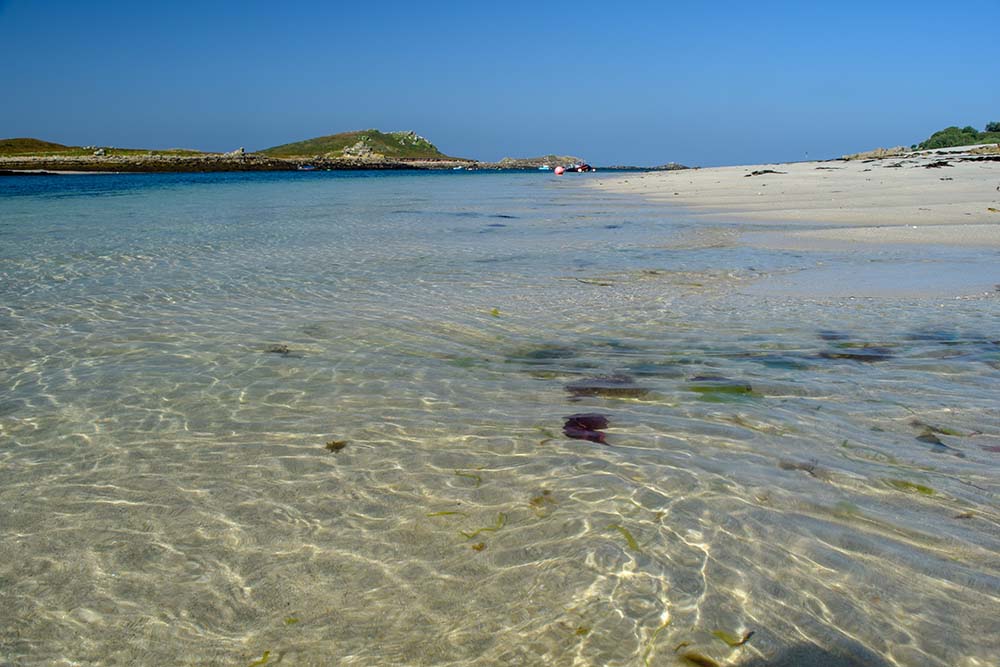
Because islands are ringed by coastline, there’s usually a beach that suits the day, somewhere sheltered when the wind is up, somewhere that works at high or low water, and often somewhere that feels surprisingly empty. Even on larger islands, the shorter distances make it possible to move between very different beaches in a single day: a gentle morning swim from shelving sand, a long walk along a sweeping bay at midday, and a late wander into a tucked-away cove where the light lingers on pale sand and rock.
I’ve visited more than 500 islands around the UK, exploring their shores on foot, by paddle and in or under the water, here are seven of my favourite beaches from the Ordnance Survey list of the 82 largest islands.
1. Vatersay, Outer Hebrides (Island 20) – white sands at the Atlantic’s edge
At the southern tip of the Outer Hebrides, connected to Barra by a short causeway, this small, low-lying island has a deeply indented coastline, a striking sand tombolo and a remarkable number of quiet, white-sand beaches all connected by fabulous coastal walks.
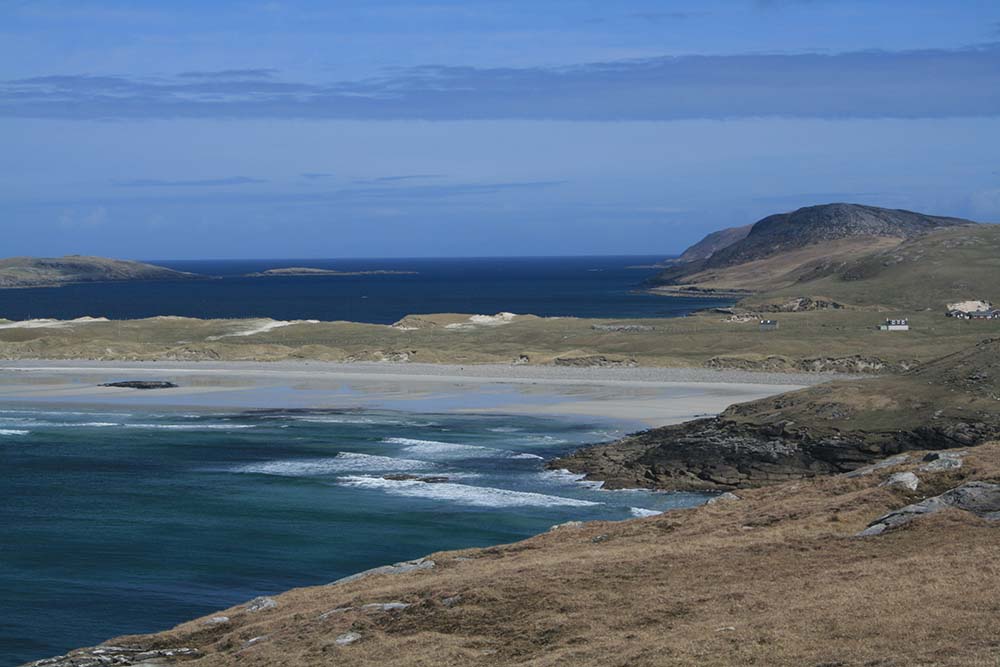
Bagh a Deas is reached by a 1.4 km walk south from the tombolo car park and is a shallow, sandy bay that works beautifully for swimming in calm conditions. Traigh Siar, on the west side of the tombolo, is a long sweep of white sand open to the Atlantic, with a very different feel to the island’s more sheltered shores and a handy proximity to the Vatersay Hall Café. Traigh Bharlais lies on the north-west of the island and is rarely visited; secluded and spacious, it’s reached by following the lane along the north coast from the causeway until it becomes a track beyond Caolis, then continuing on foot.
2. Tiree, Inner Hebrides (Island 64) – wide sands, big skies
Tiree is often cited as one of the best islands in Scotland for beaches, thanks to its low, open landscape and long sweeps of white sand backed by wildflower filled machair. With beaches around the island’s entire coastline, the character of the coast changes on every side, allowing you to choose between calm, shallow bays for swimming and paddling, or Atlantic-facing shores for surfing or walking beside the swell.
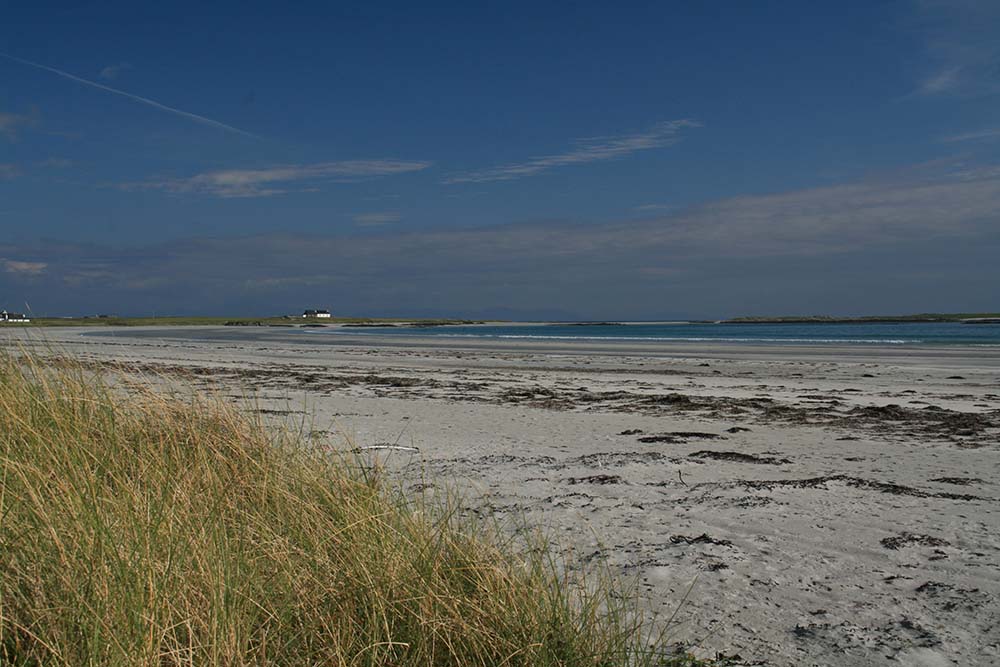
Standout beaches include the wide arc of machair-backed Gott Bay, gently shelving and facing south-east, ideal for relaxed swimming in calm weather and long shoreline walks; the open Atlantic sands of Balephuil Bay; and the pale, expansive beaches of Balephetrish and Balevullin in the north-west. Once on the island, all of these beaches – and many more – are easily linked by foot or bike.
3. Isle of Harris, Outer Hebrides (Island 82) – mountains, machair and sea
The Isle of Harris is renowned for its expansive Atlantic sands set against the hills of North Harris. Along the west coast, long arcs of white sand are backed by machair and dunes, with water shifting through vivid blues and greens as the light changes. The east coast – known locally as The Bays – is more intricate and enclosed, with small sheltered bays and grass-fringed strands tucked into sea inlets.

That contrast makes it easy to choose between calmer bays suited to swimming and paddling, or more exposed Atlantic shores shaped by surf and wind. Favourite beaches include the iconic sweep of Luskentyre, where miles of pale sand open out at low tide – a scale best appreciated from above, looking down from the crofting village of Seilebost. Scarista is prized for its surf and views across Taransay Sound, while the quieter sands of Seilebost and Niosaboist offer more shelter in settled weather. Further north, remote beaches such as Hùisinis and Tràigh Mheilein sit beneath the hills of North Harris, rewarding those willing to travel a little further with the chance of spotting golden eagles.
What really sets Harris apart is how mountains, machair and ocean meet along the shore, and how the changing mix of each gives every beach a distinct character.
4. Great Bernera, Outer Hebrides (Island 43) – quiet sands with deep history
Great Bernera sits just off the west coast of Lewis, reached by a short road bridge. Once across, the island quickly feels different. A patchwork of inland, and an island has some unique features to visit including the Bernera Riot Cairn, a Norse mill, and a large Victorian-era lobster pound.
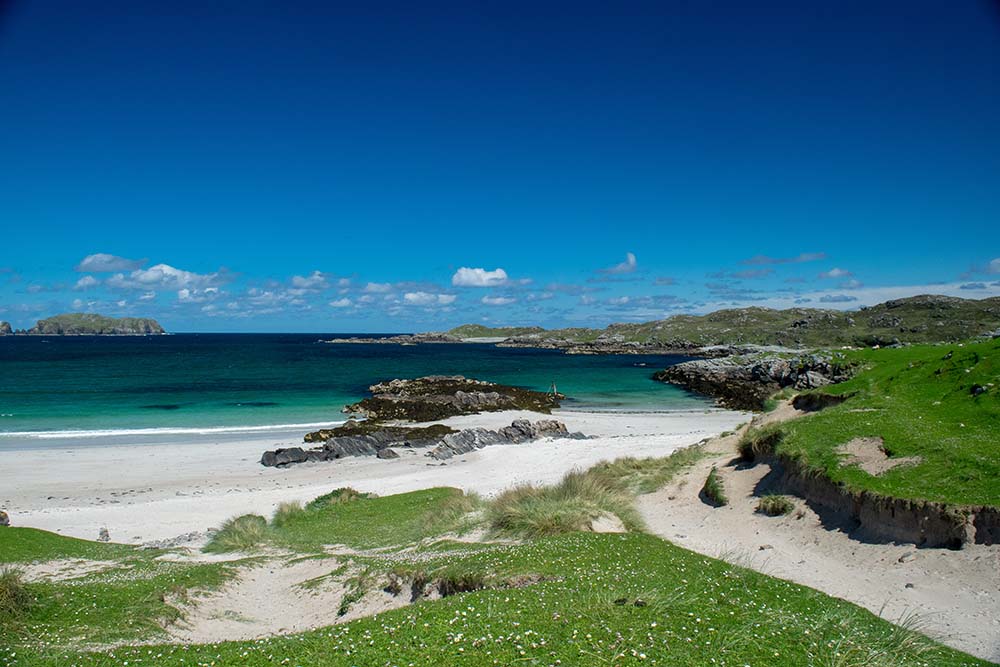
Traigh Bhostadh (Bosta Beach), at the island’s northern tip, is a real gem. A wide, north-facing sweep of pale shell-sand backed by dunes and machair, the bay is often sheltered in settled conditions, with shallow water ideal for a dip. You know when it’s high tide as the Time and Tide Bell – one of a permanent installation of twelve around the UK – rings as the water levels rise.
Just above the sand lies a reconstructed Iron Age house, a reminder that this place has drawn people for centuries. Many visitors arrive on foot, linking quiet single-track roads and sections of the Great Bernera Trail, although there is parking above the beach.

5. Anglesey (Ynys Mon), Wales (Island 78) – beaches for every kind of day
Anglesey (Ynys Mon) is often cited as one of the best places in Wales for beaches, and it’s easy to see why. With around 200 kilometres of coastline, the island packs an extraordinary variety into a relatively small space, from wide sandy bays to sheltered coves and estuary beaches backed by dunes, low cliffs and open pasture.
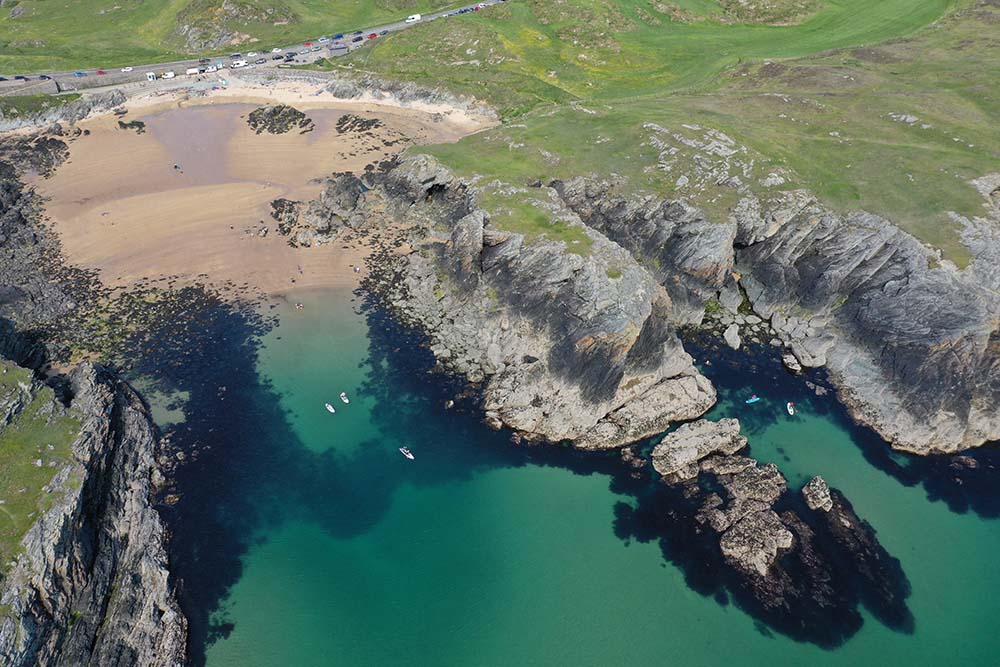
In settled conditions, sheltered spots work well for swimming and paddleboarding; when it’s breezier, more exposed beaches offer space for long, invigorating walks with the Irish Sea rolling in beside you. Standout beaches include Newborough, where pine forest and dunes lead out to the tidal coves of Llanddwyn Island, and the family-friendly sands of Benllech and Trearddur, valued for their easy access and calmer water.
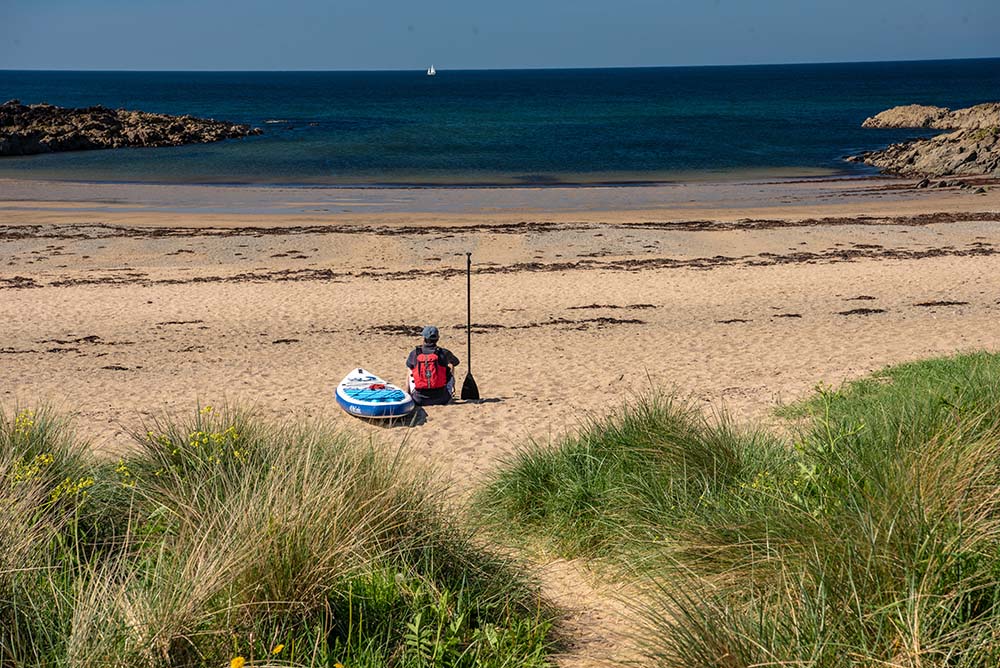
Quieter beaches such as Rhoscolyn and Silver Bay reward a little extra effort on foot, while places like Church Bay, Cable Bay, and Porth Dafarch and Llanddona add rockpools, snorkelling and wide coastal views into the mix.
Read more about visiting Anglesey
6. Isle of Wight (Island 74) – chalk cliffs and sheltered bays
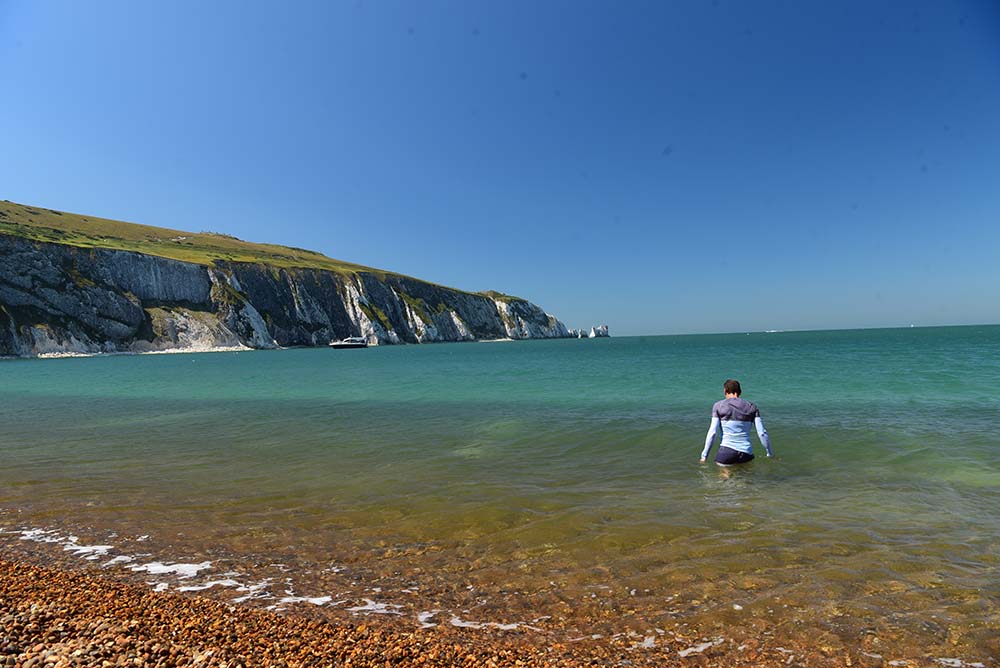
The Isle of Wight, England’s largest island, has a huge variety of beaches suited to swimming, coastal walking and paddling in all seasons. There are long open bays, sheltered swimming beaches, tidal estuaries and quieter coves tucked beneath chalk cliffs.
Standout beaches include the sweeping sands of Compton Bay, where fossilised dinosaur footprints can be easily spotted at the base of the cliffs, and Freshwater Bay, backed by chalk stacks and the rolling hills of Tennyson Down. For calmer water, Priory Bay and St Helens Duver on the east coast are popular for swimming at the right stage of the tide, offering shelter and gentler conditions.
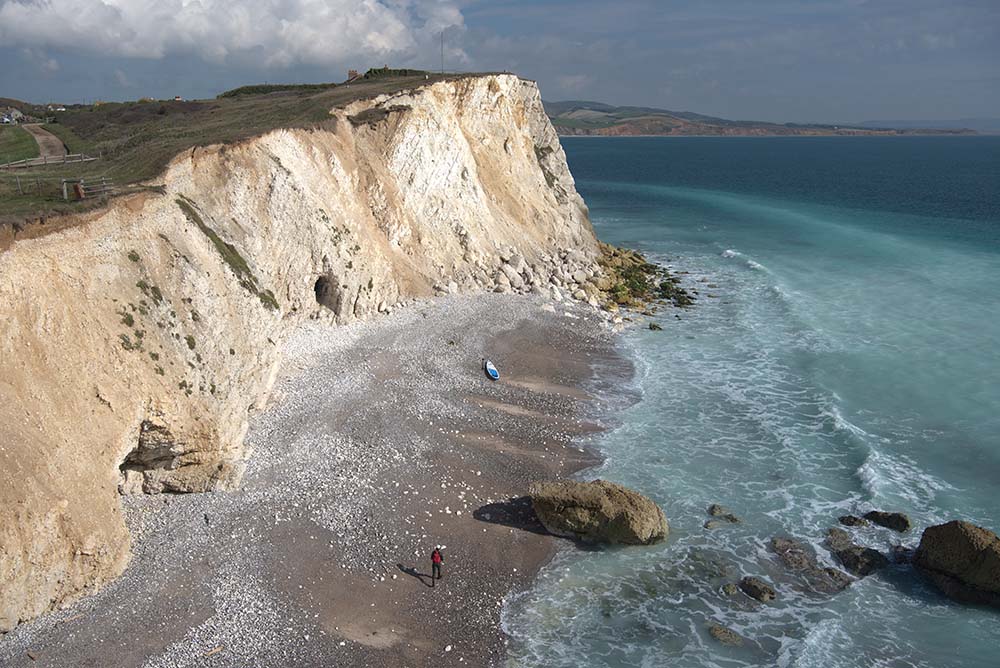
Along the west of the island, Totland Bay suits relaxed swims and short paddles in settled weather, while nearby Alum Bay is known for its striking multi-coloured cliffs and clear water, best enjoyed on calm days. Ventnor and Steephill Cove add characterful sand and shingle beaches with quick depth and clean, blue water.
Together with coastal walks, great food and drink and easy access across The Solent the isle of Wight makes a great destination for beach-lovers.
7. St Mary’s, Isles of Scilly (Island 8) – luminous water and island hopping
St Mary’s, the largest and most accessible island in the Isles of Scilly, has beaches often compared to the Mediterranean or Caribbean, with bone-white sand, shallow shelves and gin-clear water. They’re ideal for swimming, coastal walking and paddling in settled conditions, or admiring the power of the Atlantic storms.
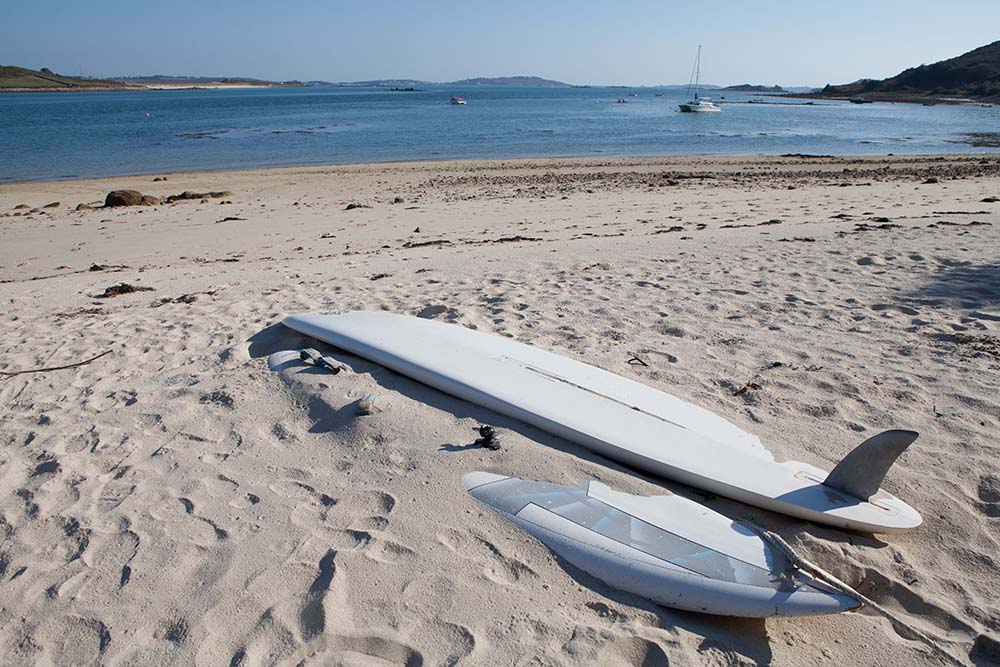
Highlight beaches include Porthcressa, close to Hugh Town and prized for its clarity and easy access; Hugh Town Beach itself, which is surprisingly calm thanks to the shelter of the harbour; and Porthmellon, a popular watersports beach slightly further west. At low tide, Bar Point extends into a beautiful sandbar walk with shallow, luminous water and views across to the other islands, while Pelistry Bay on the east coast offers a quieter option with an optional tidal walk to Toll’s Island.
Beyond St Mary’s, short boat trips open up some of the finest beaches in Britain. On Tresco, Pentle Bay’s white sands are a favourite, while sheltered Appletree Bay suits relaxed paddling. St Martin’s Lower Town Beach is sublime, and east-facing Great Bay offers a remote stretch of white sand once voted Britain’s best beach. Bryher offers a sharper contrast, with the wild Atlantic-facing coast around Hell Bay balanced by calmer eastern beach of Green Bay. Uninhabited Samson offers castaway-style beaches, and St Agnes, with its sandbar towards Gugh that’s known for shallow, crystal-clear water and close proximity to the Turks Head Inn.
Adventure with purpose
Island beaches are special places and they need a little care. On many islands, sandy shores back onto rare habitats such as machair – nutrient-rich coastal grasslands found on the Atlantic fringes of the Hebrides – as well as fragile dune systems, saltmarshes and intertidal reefs that are easily damaged. Walking lightly, sticking to established paths and avoiding flowering areas helps protect these habitats and the wildlife they support.

Seals are a familiar presence on many island shores, hauled out on rocks or quiet beaches to rest, moult or pup. Watching them from a distance is part of the experience, but giving them space matters. Keeping dogs under close control and leaving seals a clear route back to the sea helps keep encounters calm and safe. Whales, dolphins and porpoises are also regularly spotted from island headlands, and sharing sightings through schemes such as Shorewatch helps build a better understanding of how marine life uses island waters.
Small actions matter too. Picking up a little litter as you walk, choosing quieter beaches, walking between bays rather than driving, and parking responsibly all help. Enjoying island beaches doesn’t have to mean doing more; often it’s about slowing down, paying attention and sharing the shoreline with wildlife as well as other people.
Beaches worth the journey
There are so many more beaches I could have included here, but these remain some of my favourites. Each carry a strong sense of place. They invite you to walk a little further along the coast, to swim when conditions feel right, or simply to linger and watch how light and water interact with land. These aren’t beaches to rush through, but ones that reward curiosity and time.
So pack your walking boots or swimming kit, be ready to adapt your plans to the day, and enjoy the freedom that island coastlines offer. Britain’s island beaches are waiting.
More information about adventures and visiting the 82 Islands and other islands can be found at www.islandeering.com. Lisa has written two award-winning and best-selling books – Islandeering: adventures around Britain’s hidden islands; and Island Bagging England and Wales. You can follow Lisa @islandeering.

By Lisa Drewe
OS Champion, Lisa Drewe,
Lisa Drewe is an author, explorer, and the founder of the website Islandeering, a personal project dedicated to helping people discover UK island adventures with purpose. She has already explored over 500 British islands, written award-winning guidebooks, and champions regenerative travel and conservation.
Lisa is now on a mission to visit (and in some cases revisit) all 82 islands featured on our print. Along the way, she’ll uncover their unique landscapes, wildlife, and communities, while sharing how visitors can explore responsibly and support island ecosystems. Find out more about Island82