How has running into the sea with hundreds of people become a festive tradition? Rowan Clarke from Outdoor Swimmer magazine explores Christmas and New Year dipping – and how to join in safely.
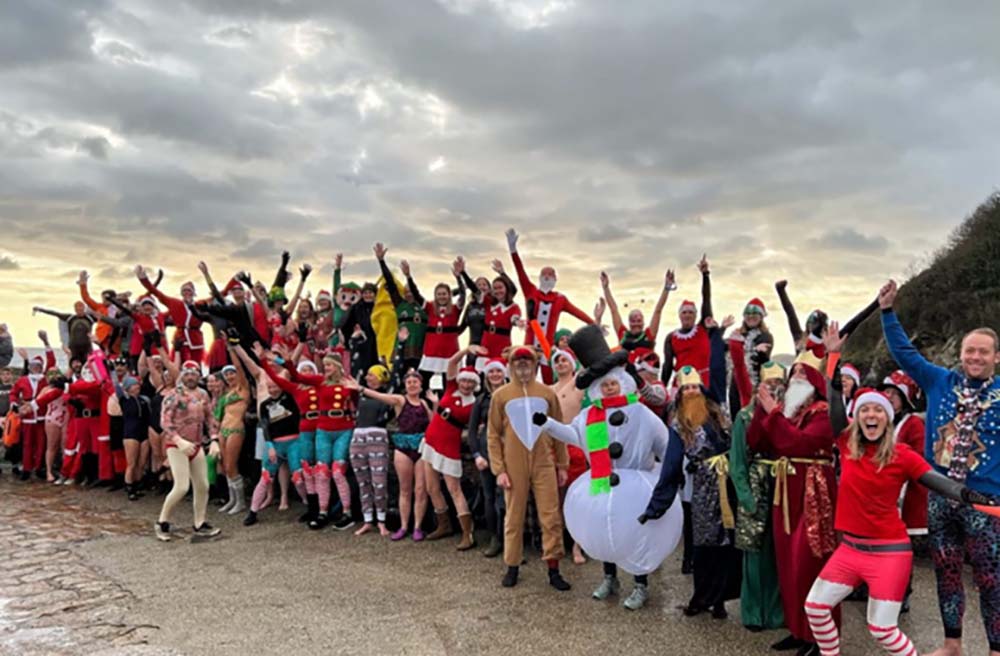
Turkey? Basted. Presents? Wrapped. Christmas tree? Decorated. Dashing into the sea with hundreds of people? Let’s go! The cold water dip has become a firm festive tradition, with organised events taking place on Christmas Day, Boxing Day and New Year’s Day all across the UK.
But can anyone do it? Should you take the plunge with a hangover? What if your rellies want to join in?

When Did Cold Water Dips become a Festive Tradition?
Dipping at Christmastime is thought to have started in the 19th century. Members of the UK’s oldest swimming club in Brighton would have swum on Christmas Day at 7am as any other day.
However, it was during the 1970s and 80s that mass festive dips really began. One of the best known is Edinburgh’s Loony Dook, which started in on 1 January 1986 when a group of friends went for a swim in the icy water as a hangover cure. Now, on its 40th anniversary, it is bigger, brighter and loonier than ever.
Is cold water a good hangover cure?
A bracing dip is often touted as an efficient way to get rid of your Christmas or New Year hangover. Cold water does indeed clear your head, but even seasoned cold-water swimmers should be aware of the risks of a cold water swim the morning after a boozy night out.
During the season of excess, be mindful that cold water swimming while hungover increases your risk of hypothermia. Being hungover makes you tired and dehydrated, with low blood sugar levels and electrolyte imbalance causing muscle fatigue and cramps.
It’s even more critical to avoid swimming under the influence of alcohol. Alcohol causes blood vessels near the skin to dilate, increasing heat loss, so you’ll get colder and struggle to warm up. It also impairs your judgement, coordination and reaction times. Best save the mulled wine for later after you’ve warmed up.
Are organised events best?
As the cold water tradition has grown, so too has the number of festive dips. This gives us more choice about where we swim, and what sort of event we take part in.
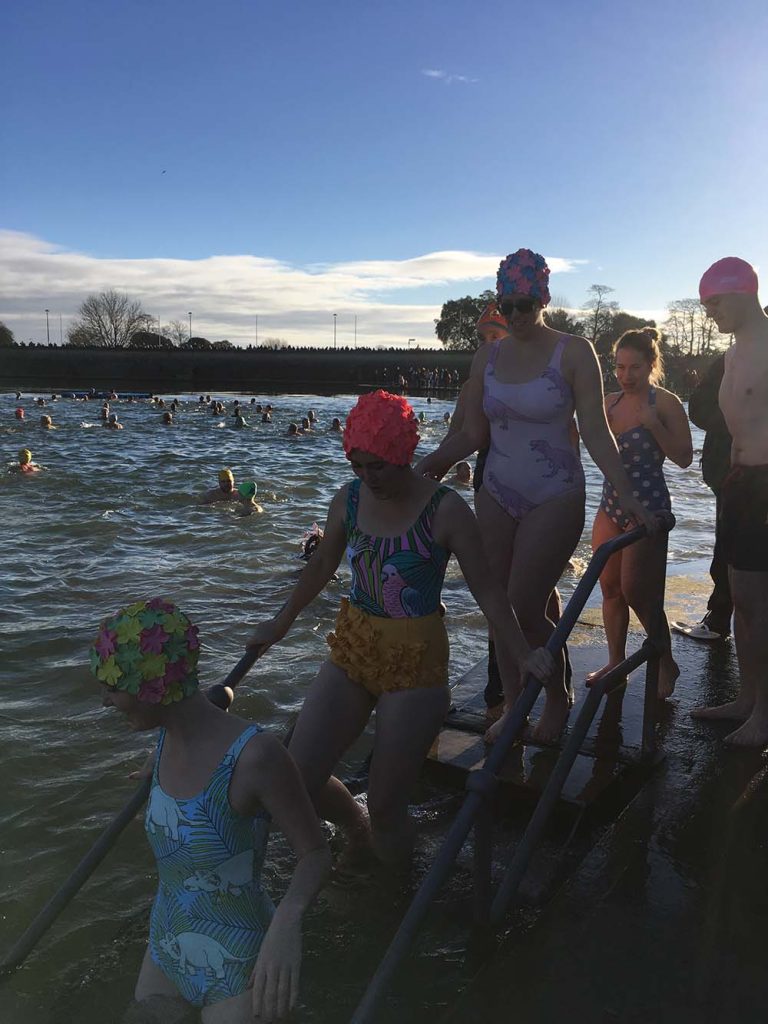
Take your pick of organised swims by local charitable organisations, swim venues and lidos. Often raising funds for charities or to support the swimming venues and Lidos that organise them, these events usually provide good safety cover.
But not all festive dips are so well organised. Many are spontaneous gatherings that have grown organically where you swim at your own risk. The advantage of these fun events is that they’re usually free, but there’s no safety cover.
If this is your first or only icy dip of the year, or if you’re taking unacclimatised friends or family, it’s well worth finding an organised swim or going to an open water swimming venue or Lido with lifeguards.
But even acclimatised cold water swimmers should be aware that running into the sea or throwing yourself into a body of water is very different from a more traditional and considered entry. If you choose an ‘at your own risk’ event or swim independently, you should be hyper-aware of how to look after yourself and fellow swimmers.
Can anyone do a cold water dip?
Festive dips are open to all, so everyone can join in. The water will be exceptionally cold, so take care if you:
- Have a heart problem or uncontrolled high blood pressure: Seek medical advice before taking part.
- Are very young or very old: People of all ages dip in cold water all around the world. Children and elderly dippers should take it easy, keep dips brief, and warm up well. Never pressurise anyone to get into the water no matter what their age.
- Have a medical condition: Seek medical advice if you’re unsure.
If you have a physical disability or injury that affects getting in or out of the water, you should check with organisers or venues about their accessibility support. Plenty of swim spots are accessible, but some are trickier.
How can I stay festive dip safely?
Whatever kind of festive swimming you do, here are some tips to safely enjoy the rush of cold water dipping in (relative) comfort.
- Acclimatise if possible. A few brief dips before the big event will prepare you for the cold and make your swim more enjoyable. If you can’t get into the water, try a cold shower – but remember that it’s not the same.
- Wrap up warm before your swim. And don’t get undressed until the last minute.
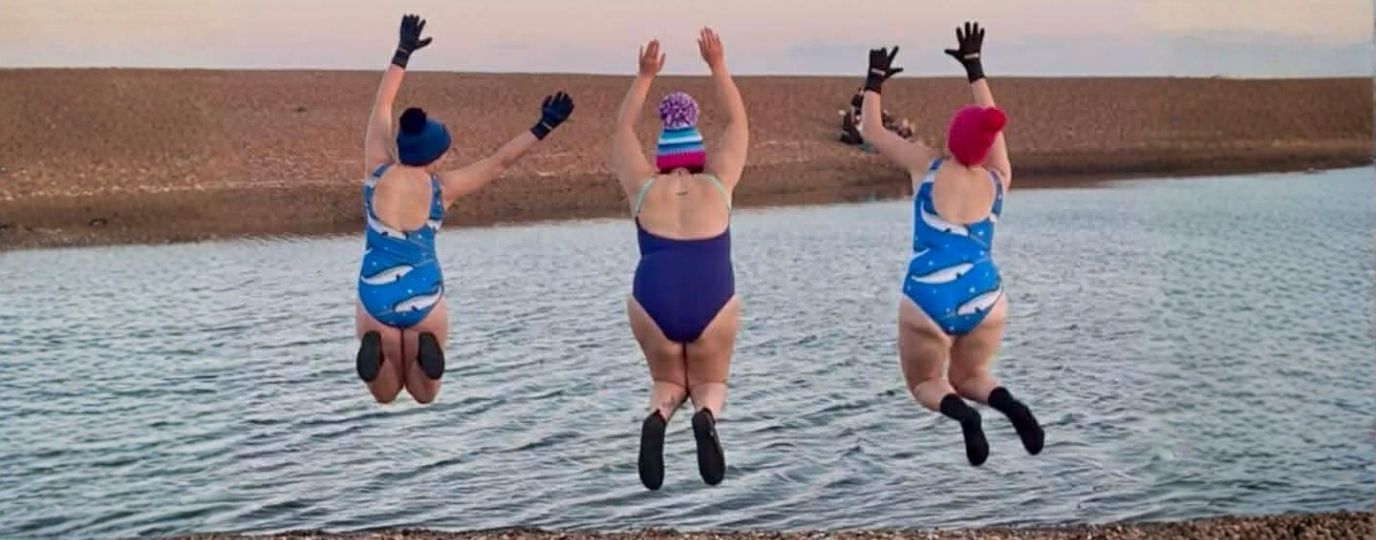
- Wear the right kit. A swimming hat or bobble hat will help preserve body heat. You can also wear a wetsuit, neoprene gloves, booties and a balaclava.
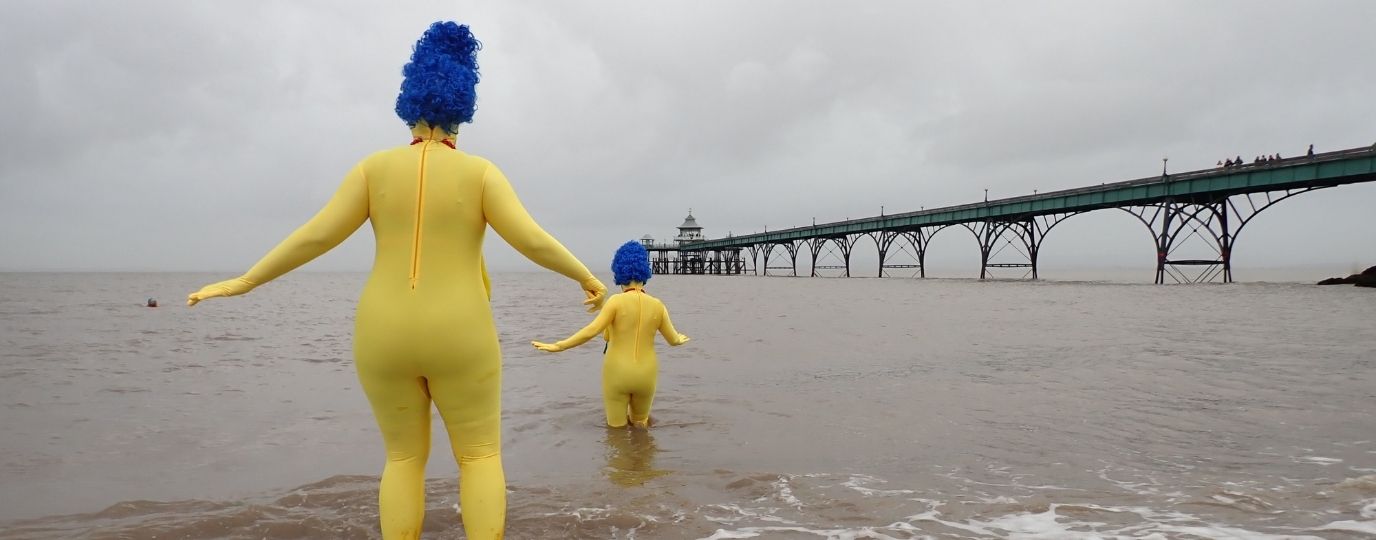
- Plan your fancy dress. If you are dressing up, make sure your costume is suitable for swimming in – be wary of extra weight and drag!
- Take care when running into the sea. A mad dash into the sea isn’t so much fun if you twist your ankle.
- Do not dive or jump in. Cold water causes a huge intake of breath and cold water shock, which can be very dangerous. Instead, immerse yourself slowly, remembering to breathe, and do not put your head under the water until your breathing is under control.
- Keep it brief. In winter, even experienced swimmers only swim for one or two minutes at a time. You might not feel cold until after you get out of the water, so be aware of ‘after drop’ and do not stay in the water too long.
- Get dressed quickly. Remember that your body temperature will continue to drop after you get out of the water, so take off your wet clothes and put on your warm, dry layers as quickly as you can.
- Warm up slowly. Do not have a hot shower or bath. Hot water can be dangerous, deepening your after drop and causing a drop in blood pressure. Instead, make sure you have plenty of warm clothes, wrap up well and have a hot drink and something to eat.
Prepare for your festive dip
You’ve already started preparing for your festive dip by reading this article. You can also make sure that you warm up well by packing the right kit for after your swim.
Your kit checklist
- Your swimmers plus neoprene accessories and a hat to wear in the water
- Towel
- Flip flops or Crocs to wear to and from the water’s edge
- Warm, loose, comfortable layers
- Woolly gloves
- Woolly hat (or Santa hat!)
- A warm weatherproof coat or changing robe
- Flask of hot drink
- Cake

I’ve got the cold water bug – what next?
If you follow these tips and make sure your festive dip is safe, fun and as comfortable as it can be you never know – it may be the start of something! Many ardent winter swimmers tell Outdoor Swimmer that it all started with a New Year swim.
To continue swimming through the winter, try:
- Joining a local group: Cold water is safer and more fun with friends. Find your nearest swim group using Facebook, searching online or checking out an organisation like the Bluetits Chill Swimmers.
- Finding a cold water coach: Check out your local swim venue or social media for a qualified coach, or search here. Choose someone who has cold water or winter swimming experience.
- Doing an Outdoor Swimmer course: Rowan and Outdoor Swimmer’s founder, Simon Griffiths, run winter swimming courses. The next one is January 10th – sign up here
Find your festive swim here

Read more inspiring articles from Rowan Clarke
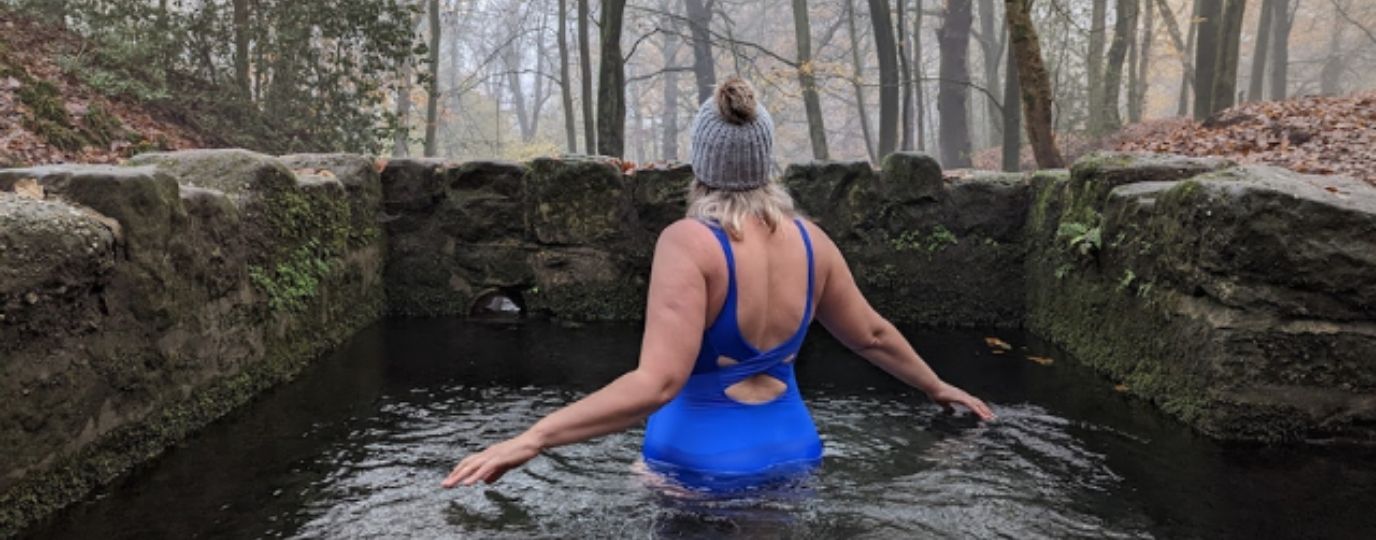
Winter Wild Swimming: How to find mid-winter magic in the water
Discover the magic of winter wild swimming. Explore blue spaces, health benefits, safety tips, and the spiritual side of cold-water.
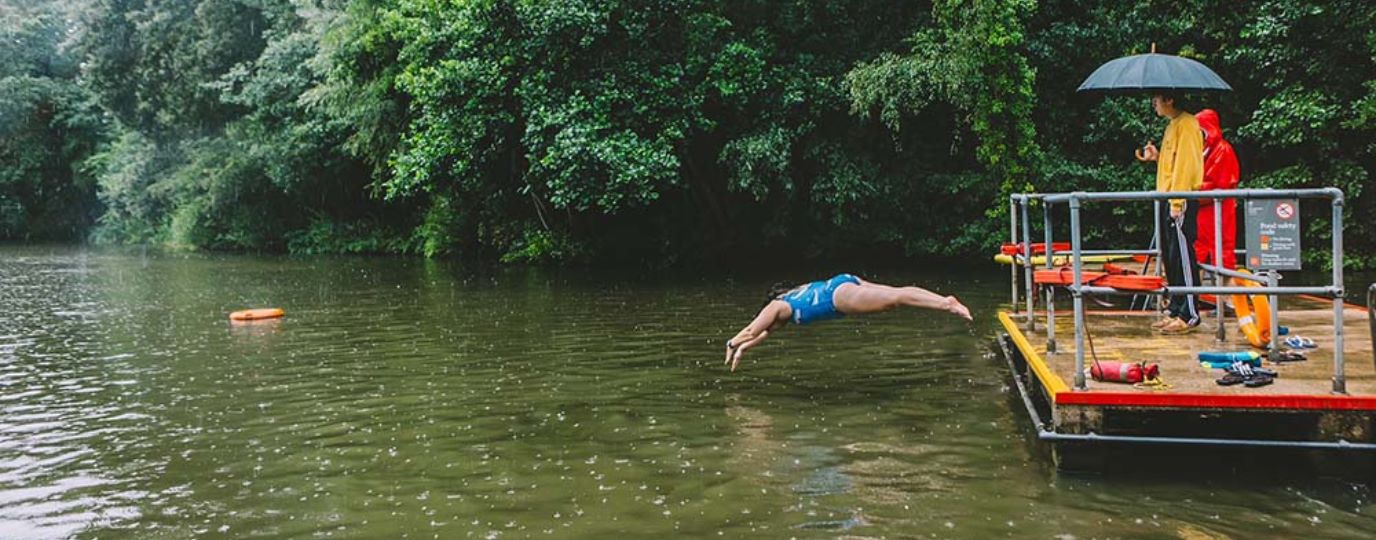
Water Pollution Risk for Wild Swimmers in the UK
Expert advice from Outdoor Swimmer Magazine on water pollution risk for wild swimmers and how to swim safely using real-time data and hygiene tips.
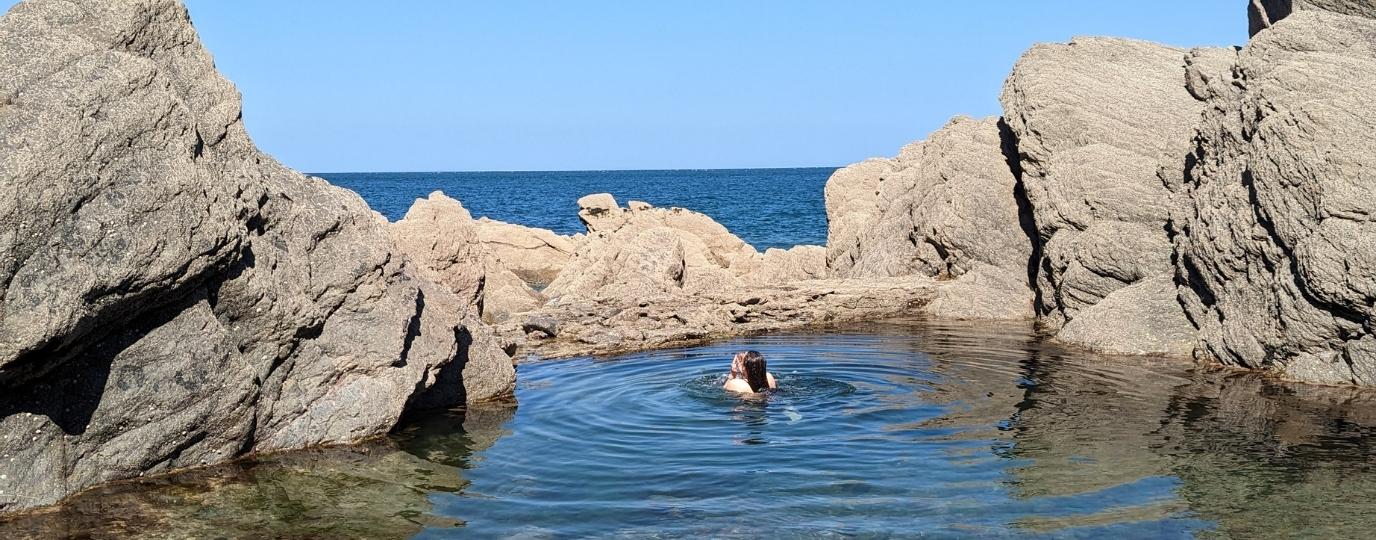
Cove-hopping & Wild Swimming in Devon
Explore 7 secret wild swimming coves in Devon on these two fabulous cove-hopping coastal path walks