

Ticks on Dogs: Risks, Prevention, and Lyme Disease Explained
There’s nothing quite like a long walk in the British countryside with your dog – fresh air, open views, and well-earned tired paws at the end of it. But for dog owners who enjoy outdoor adventures, there’s an unseen companion you need to be aware of: ticks.
Ticks are tiny arachnids that live in long grass, woodland edges, and heathland. They don’t jump or fly – instead, they wait on vegetation for a passing host and then climb aboard. Once attached, they feed on blood and, if infected, can transmit serious illnesses, most notably Lyme disease, to both dogs and humans.
This article explains what Lyme disease is, why early treatment matters, and how dog owners can reduce the risk to their dogs – and themselves – when spending time outdoors.

Can My Dog get Lyme Disease from Ticks?
Lyme disease is a bacterial infection caused by Borrelia bacteria, transmitted through the bite of infected ticks. In the UK, the sheep tick (Ixodes ricinus) is the main carrier. Ticks become infected when they feed on animals such as mice or hedgehogs, and can then pass the bacteria on to the next animal they bite.
Dogs can pick up ticks simply by brushing through vegetation like tall grass or bracken – areas commonly found along footpaths, in parks and across open countryside. While not every tick carries Lyme disease, where ticks are present, there is always some risk.
Why Prompt Treatment of Ticks Matters
If an infected tick bites and remains attached long enough – it can transmit Lyme disease. In dogs, early infection may cause:
- Fever
- Lethargy
- Loss of appetite
- Stiffness, pain, or swelling in the joints
- Lameness that can shift from leg to leg
- Swollen lymph nodes
It’s important to put this into context. Dogs appear to be more resistant to Lyme disease than humans, and many dogs exposed to the bacteria may never go on to develop noticeable illness. In day-to-day veterinary practice, other tick-borne conditions or causes of lameness are often more common.
However, Lyme disease can and does occur in dogs, and when it does, early diagnosis and treatment are important. Most cases respond well to antibiotics if caught promptly. Left untreated, infection can lead to more serious complications, including long-term joint problems and, in rare cases, kidney damage.
Can Ticks on Dogs Spread to Humans and Put Families at Risk of Lyme Disease?
Even though dogs tend to be more resilient, the presence of ticks on your pet is a clear signal that ticks are active in your area.
Dogs can act as “tick taxis”, carrying ticks home on their fur or equipment. These ticks may drop off indoors or transfer to clothing, increasing the risk of human exposure.
In people, Lyme disease can have significant and sometimes long-lasting effects if not treated early. Symptoms may begin with flu-like illness, fatigue, headaches, muscle and joint pain, and sometimes an expanding rash. If diagnosis and antibiotic treatment are delayed, the infection can affect the nervous system, joints or heart, potentially leading to persistent symptoms.
So while Lyme disease in dogs may be relatively uncommon compared to humans, finding ticks on your dog should always prompt vigilance. Protecting your dog from ticks isn’t just about their health – it’s also about reducing risk to yourself and your family.
How Can I Stop My Dog Getting Ticks?
Completely eliminating tick risk isn’t possible, but there are practical steps every dog owner can take:
1. Know Where Ticks Live
Ticks thrive in areas where they can easily attach to passing animals, including:
- Tall grass
- Woodland and dense undergrowth
- Leaf litter and shaded vegetation
Ticks are most active from early spring to late autumn, but they are a year-round threat – mild winter weather or warm spells can keep them active.
They aren’t confined to remote countryside. Ticks are increasingly found in town parks, urban green spaces, and even domestic gardens. Any area with vegetation and wildlife – including birds, squirrels, and hedgehogs – can support ticks. This means everyday dog walks close to home can carry risk, so it’s wise to stick to well-maintained paths, avoid long vegetation where possible, and check your dog thoroughly after each walk.
2. Use Vet-Recommended Tick Prevention
Regular parasite control – such as spot-ons, oral tablets, or collars – significantly reduces the chance of ticks attaching and feeding. No product is 100% effective, so speak to your vet about the best option for your dog’s lifestyle.
Some vets in the UK may also recommend a Lyme disease vaccine for dogs regularly exposed to tick-prone areas.
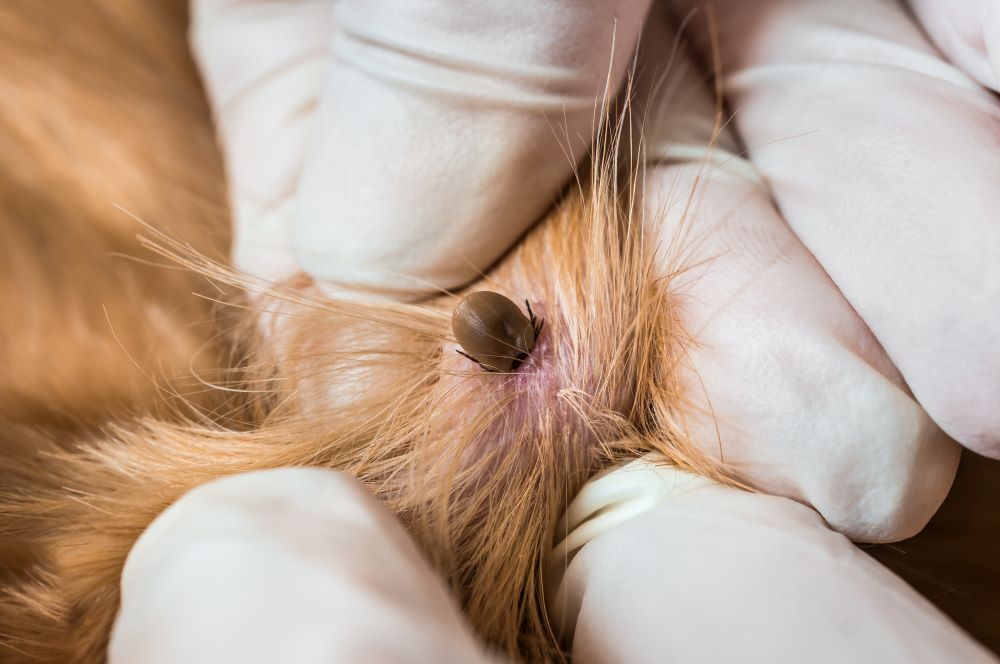
3. Check Your Dog After Every Walk
After each walk:
- Run your hands through your dog’s coat thoroughly.
- Pay special attention to ears, belly, armpits, neck, and between the toes.
- Remove any ticks promptly using a proper tick removal tool or fine tweezers.
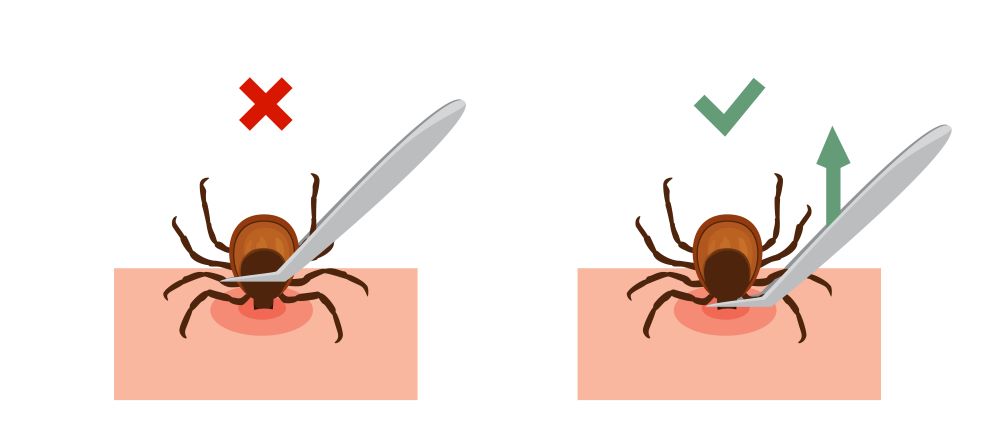
ACT QUICKLY
The longer a tick remains attached, the higher the chance of disease transmission. If you’re unsure how to remove a tick safely, ask your vet to demonstrate.
4. Grooming and Coat Management
Regular grooming helps spot ticks early and makes it harder for them to remain hidden. Keeping your dog’s coat well maintained – particularly around the legs, chest, and ears – reduces the chance of ticks attaching unnoticed.
5. Manage Risk at Home
Take simple precautions at home:
- Wash dog bedding frequently.
- Inspect leads, harnesses, and coats.
- Avoid allowing dogs straight onto soft furnishings after countryside walks.
These steps reduce the chance of ticks surviving indoors and reattaching later.
Should I Call the Vet?
If your dog shows signs of illness after a known tick bite – particularly lethargy, fever, or joint pain – contact your vet immediately. Prompt treatment greatly improves recovery chances.
Enjoy the Outdoors – Safely
Dogs and outdoor life go hand in hand. With vigilance, preparation, and simple daily habits, you can enjoy walks and adventures without letting ticks spoil the experience.
Lyme disease isn’t something to take lightly, but with awareness and the right precautions, it is absolutely manageable – for both the health of your dog and your family.

By Lyme Disease UK
Lyme Disease UK is a UK-based charity dedicated to raising awareness, supporting research, and providing guidance for those affected by Lyme disease. Through advocacy and education, the organisation works to improve understanding, early diagnosis, and care for individuals impacted by the illness.