Paddleboarding in London
In this post Paddleboarding expert and Author of Paddle London debunks the myths about paddleboarding using public transport in London. She breaks down all the common questions she gets on Paddleboarding in london
How to find places to paddleboard in London
Where to launch your paddleboard in London
How to take your paddleboard on the tube and other public transport
What paddleboarding kit you need with you (and how to carry it)
Can You Really Paddle in London? Yes and Here’s How
“But you can’t paddleboard in London” is usually the response when I tell people where I paddle. I understand why. London isn’t an obvious SUP destination. It doesn’t have the rugged beauty of Scotland’s lochs, the clear turquoise waters of the Cornish coast or the wild, remote landscapes of Wales.
But I live in London and this is my paddle environment. These are the waterways I can reach on an ordinary day, before work or at the weekend. After more than a decade of paddleboarding in London, I can say with confidence that it offers far more opportunity than most people realise.
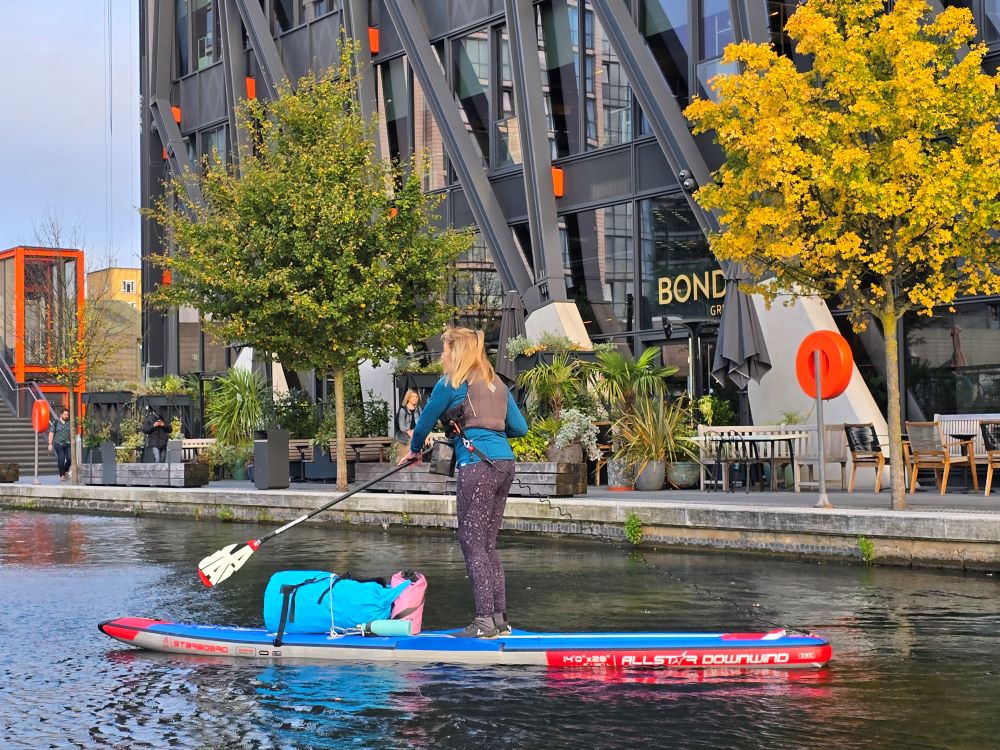
I live in a small first-floor flat in southwest London. I don’t own a car and I paddle year-round. The same questions and doubts come up again and again, so this is how I’ve worked them out for myself.
“There’s nowhere to paddle in London”
This is the biggest misconception.
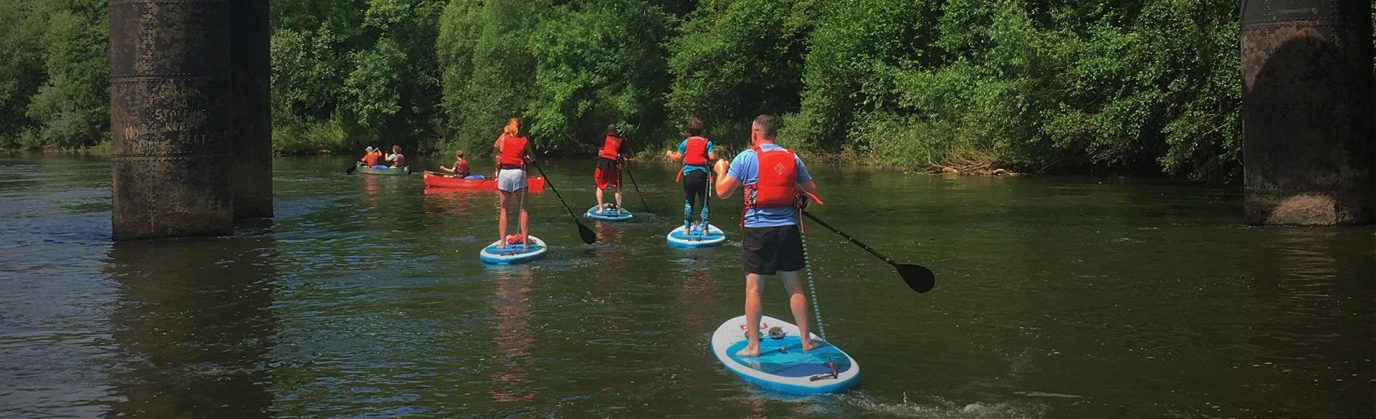
The Thames ebbs and flows through London. While paddleboarding isn’t permitted in the very central section, upstream of Putney Bridge, I love the reach best known for the Cambridge-Oxford Boat Race. I often glide past classic Thames scenery: Kew Gardens, Isleworth, Syon House and Richmond. These are the same river views that inspired JMW Turner.
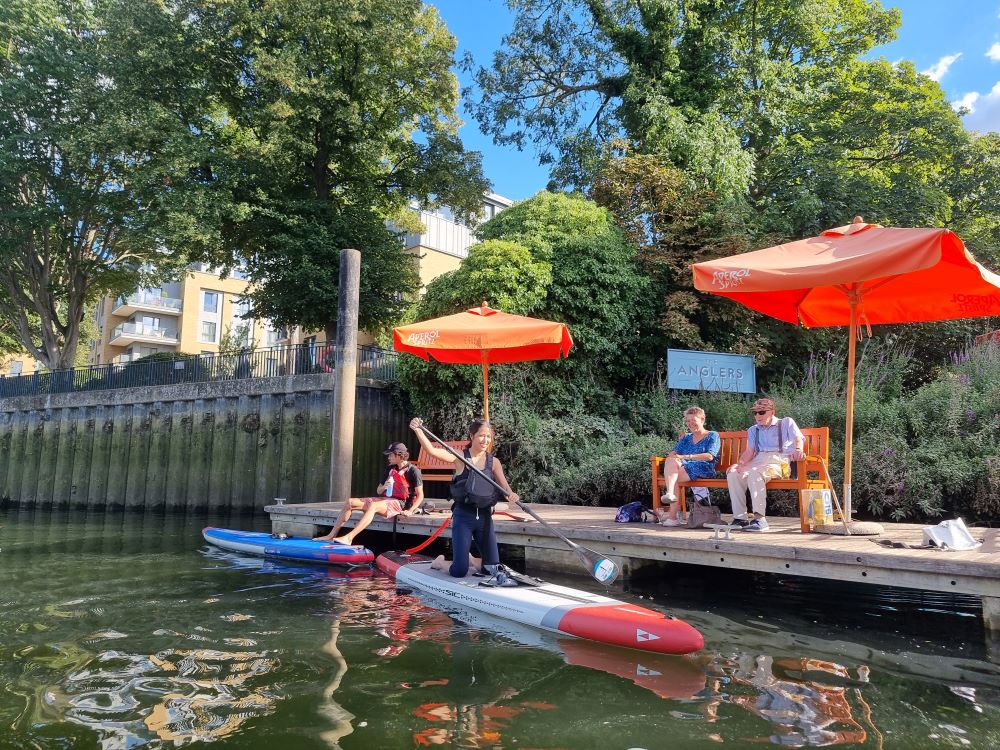
Above Teddington Lock, the Thames becomes non-tidal. There are several islands, secret backwaters, traditional riverside pubs and historical landmarks from Kingston all the way to Windsor, Maidenhead and Reading, now within the TfL contactless zone.
For more urban scenery, the old working waterways are an often-overlooked resource. Regent’s Canal, Grand Union Canal, Lee Navigation, Hertford Union Canal and Limehouse Cut carry traces of their industrial past but also provide surprising tranquillity and pockets of nature. Add in rivers, docks, basins and reservoirs and you start to see my London – stitched together by water.
“I wouldn’t know where to launch from”
Coming from Finland, where the right to roam allows free access to water, I found the do’s and don’ts in England confusing for a long time. Unlike the coast, inland waterways are managed by different authorities, each with their own rules and licence requirements. It’s not always obvious and the uncertainty puts a lot of people off.
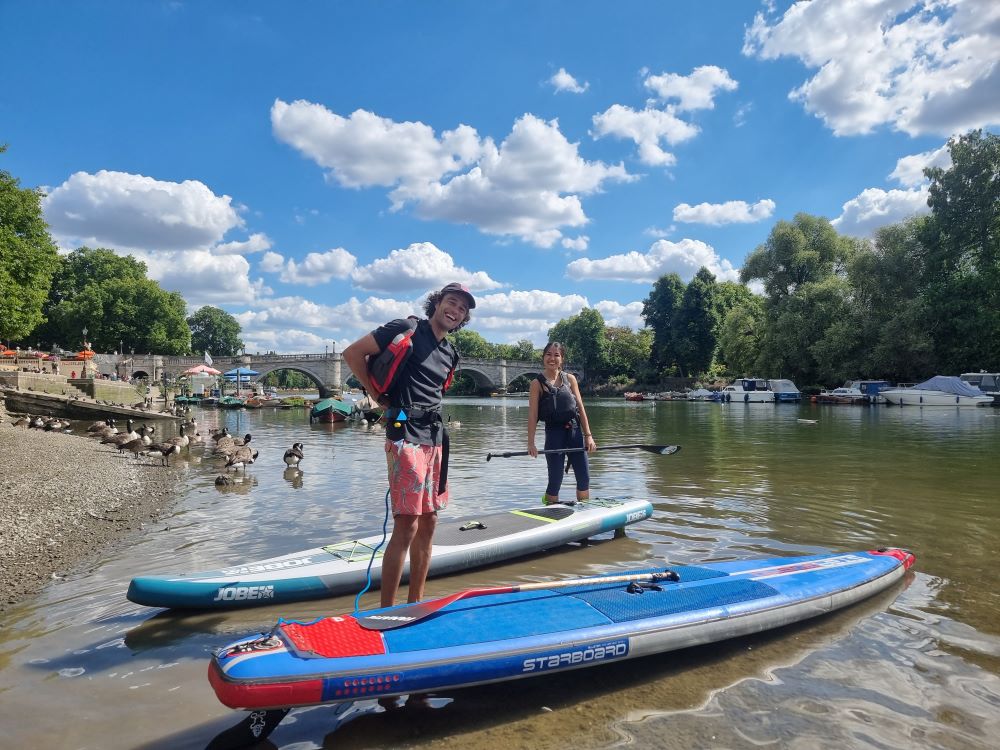
A Paddle UK membership provides a comprehensive waterways licence that covers much of London and the surrounding area. Without it, individual permits can be bought directly from the relevant navigation authorities.
Even so, I felt there was a real need for better guidance for paddlers in London. That’s why Paddle London includes 40 routes with clearly marked launch and exit points, alongside licence information. Knowing exactly where you can get on and off the water makes all the difference.
“Parking would be a nightmare”
Driving and parking is possible but comes with layers of considerations: Congestion Charge in central areas at certain times and ULEZ now operating across all boroughs, 24/7. Dedicated waterside parking is rare and usually charged. Street parking is often capped at two hours.
I don’t own a car, so I’ve never had the expectation of driving straight to the water, inflating my board next to it and hopping on. That mindset shift helps. For some Paddle London routes, I’ve identified nearby car parks, but I always recommend checking parking apps for the most up-to-date information.

“Taking a board on public transport sounds heavy and awkward”
The first time is daunting, I won’t lie.
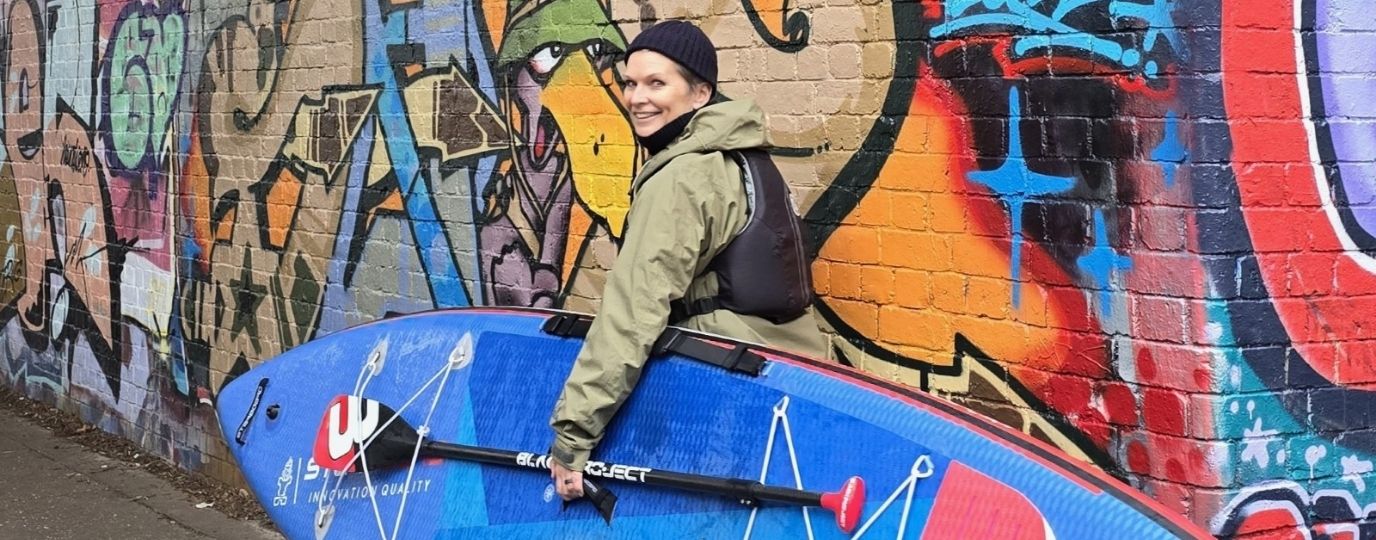
Now I take my SUP on public transport all the time – trains, buses, the Tube and occasionally the cable car and river bus. One-way paddles are my favourite. Without a car to return to, public transport opens up whole new route possibilities.
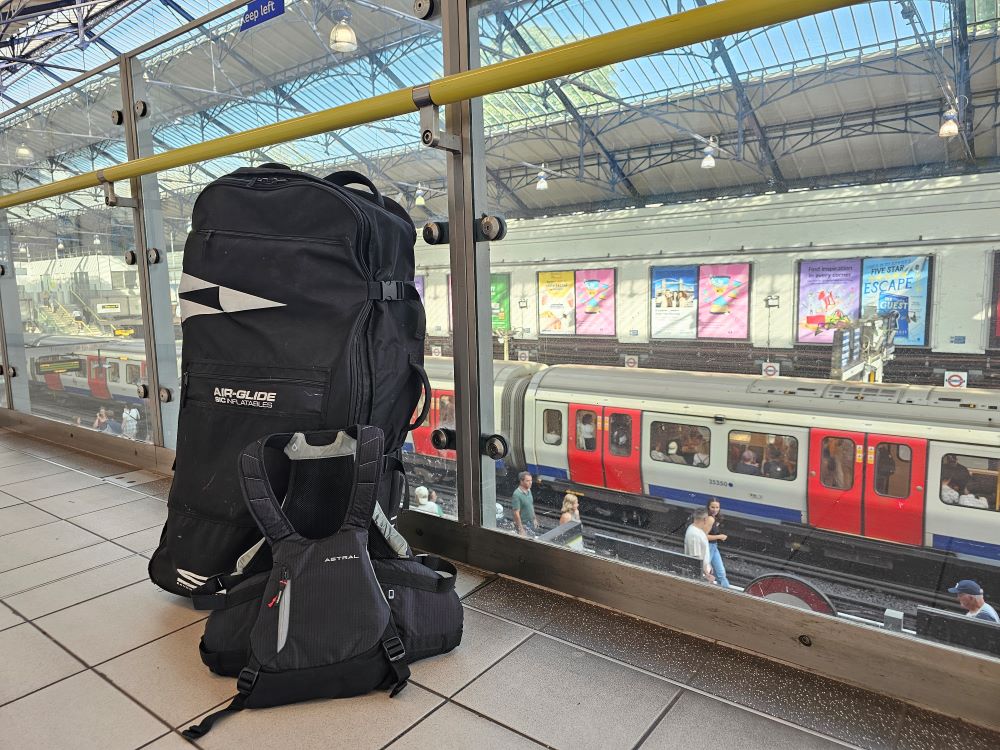
Inflatable boards are made to travel, but not all board bags are equal. Mine fits the board, three-piece paddle, fin, buoyancy aid, pump and a small drybag. I keep things light and often leave home already wearing my paddle clothes.
A wheelie bag with backpack straps is ideal. I can roll it on longer walks and carry it at stations without step-free access. I plan journeys carefully, prioritising fewer changes and avoiding rush hour where possible. One rule I’ve learned the hard way: I will never again take a large SUP bag onto the Waterloo & City line with early-morning commuters.
People often offer to help carry my SUP bag or give up a seat, maybe courtesy of my grey hair. I usually decline, slightly surprised, but it’s a good reminder that people are often kinder than you expect.
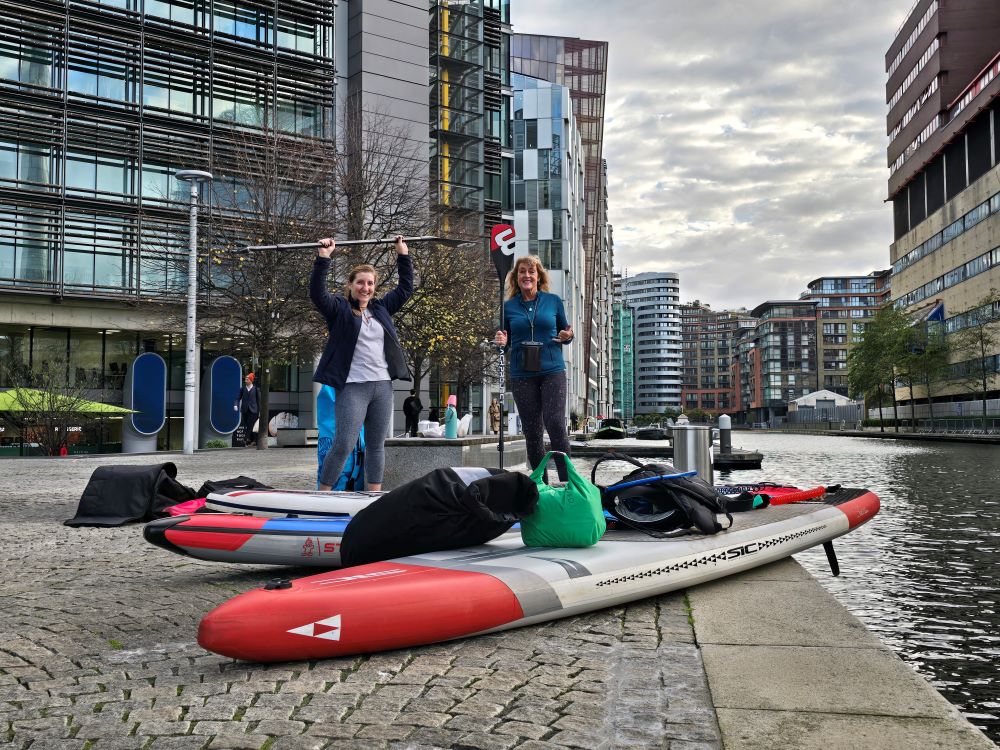
“What about all the kit?”
I get this question a lot.
I head out with the assumption that everything I need must go on my board – the stuff people usually leave in their cars. Leaving home, I mentally shift into explorer mode, picturing somewhere like the Norwegian fjords, where carrying all your kit is simply part of the deal.
Over time, I’ve refined a system. I pack mindfully: if an item doesn’t have a clear function, it stays behind. When paddling with friends, sharing a pump, for example, reduces the amount to carry.
Once I reach the launch spot and inflate the board, my biggest hack is simple: everything goes into one large, 60-litre drybag. Carrying one well-packed bag is far easier than juggling multiple items, especially when portaging. I roll my wheelie bag tightly from the wheel end, strap it and pack it into the drybag along with the pump and a smaller essentials bag. Everything goes into roll-top drybags, so spare clothes and waterproofs take up very little space.
Yes, it’s heavy. But once it’s on the board, it mostly just sits there. And it works. I still haven’t made it to Norway, but London’s waterways have given me plenty of kit-carrying practice in the meantime.
I also have no shame in asking nearby cafés or businesses if they’ll store my bag while I’m on the water. More often than not, they say yes. Again, people are kind.
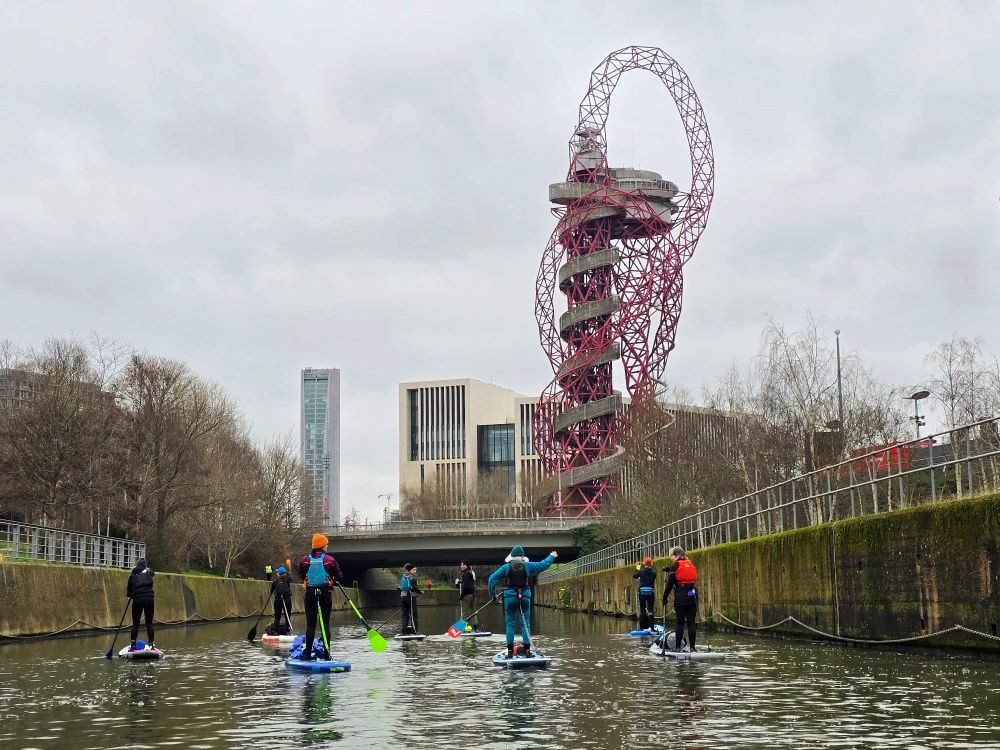
Why London is great for paddleboarding
I wrote Paddle London to highlight the adventures waiting on our doorstep. Urban paddling is easy to start, fun to do and a brilliant way to see London from a new angle. You don’t need a car, a van or trip to the coast to get on the water.
Yes, you really can paddle in London. Sometimes, all it takes is knowing where to go, getting some tips and having the confidence to start.
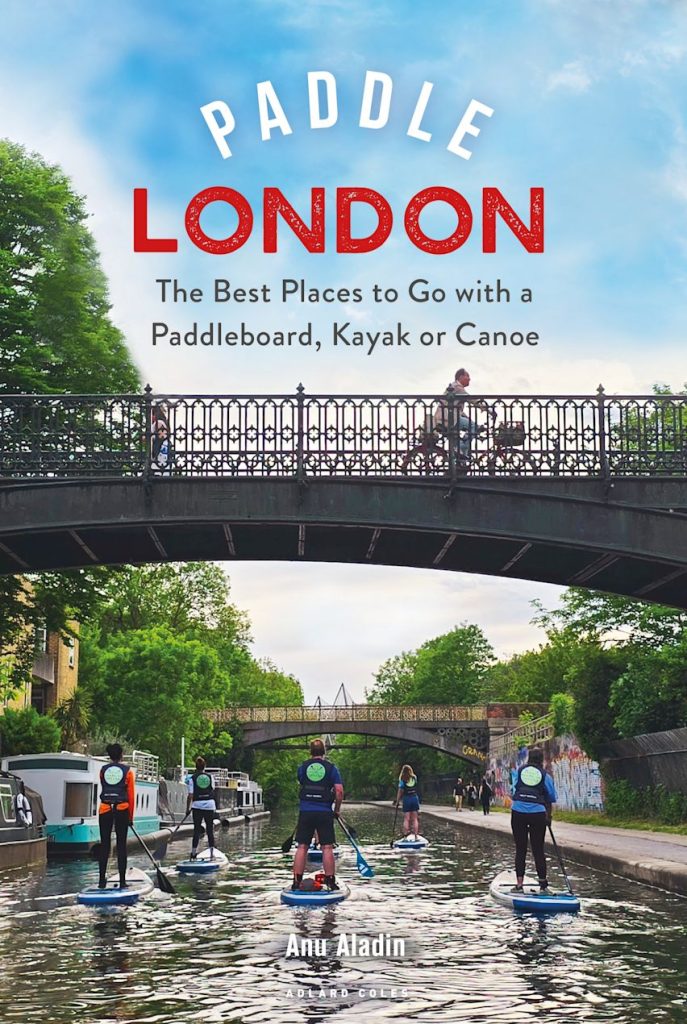
Find out more about Anu Aladin’s New Book – Paddle London
Paddle London invites you to see the capital from the water. A practical and inspiring guide to exploring in and around London, it features 40 urban and rural routes across the Thames, canals, rivers, docks and reservoirs, combining clear maps, photos and essential guidance with history, wildlife and public transport–friendly access.
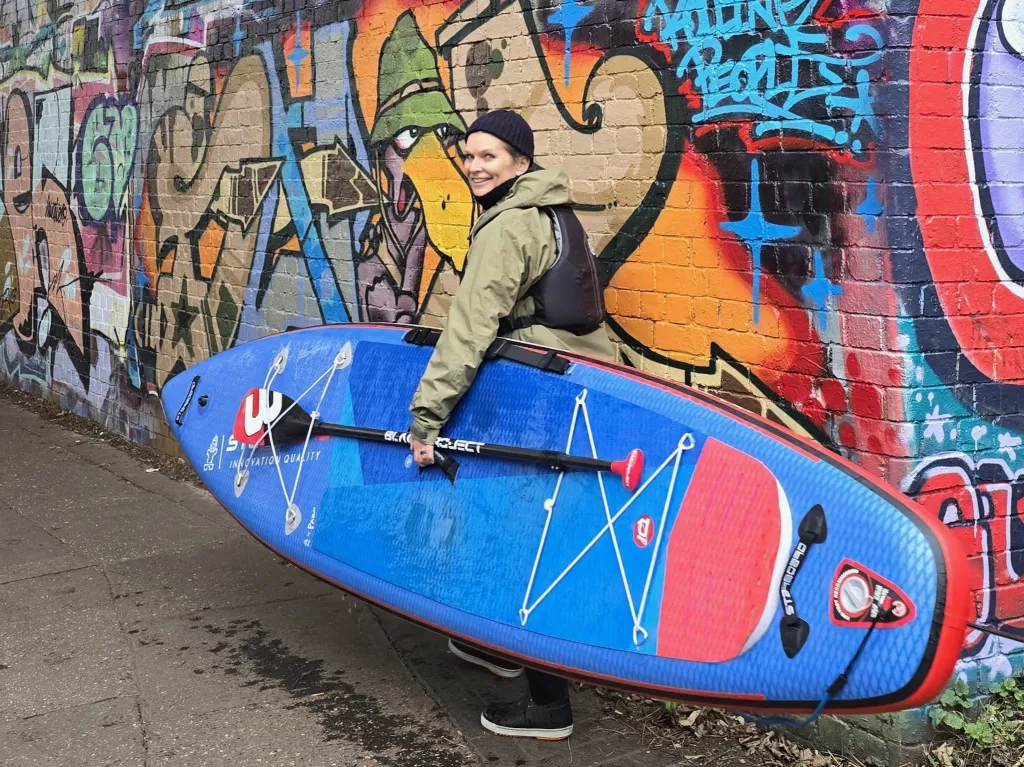
By Anu Aladin
Anu Aladin is an experienced paddleboarder and writer based in South West London. A former co-owner of Paddleboarding London, she previously ran SUP lessons and guided tours. Anu has now drawn on that experience and local knowledge to write her first guidebook, Paddle London.
With over a decade spent exploring the capital from the water, Anu paddles year-round. She writes about her adventures on her blog, My SUP Stories, bringing together routes, the people she meets and practical SUP tips.
Anu is passionate about showing how accessible paddling can be in London, often travelling by public transport with her inflatable board. She believes in the restorative power of water, whether paddling or sitting in a sauna. On the board, she’s always spotting street art, canal boat names, bridges, pylons and gasholders, and she’s convinced cinnamon buns are an ideal SUP snack.