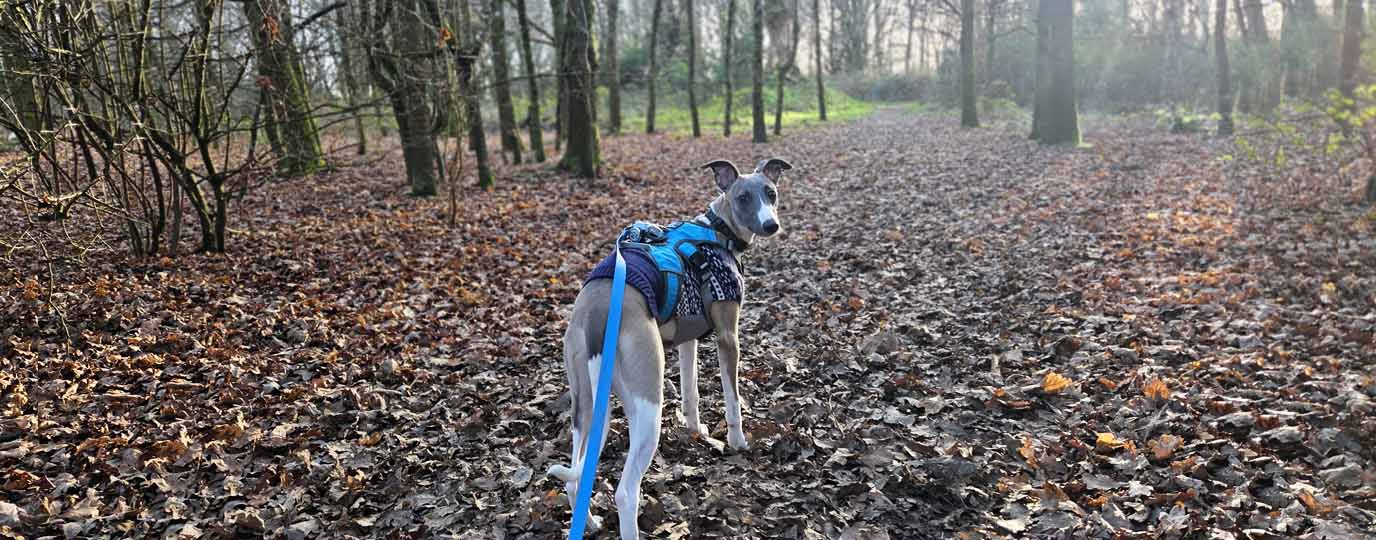
Puppy walking – discovering the outdoors together
There’s something special about a puppy’s first walk and all the little adventures that follow. They’re stepping into a whole new world, where every sound, scent, and passing leaf is a brand‑new experience. Watching them take it all in becomes one of the best parts of those first few weeks and months together.
Having a four‑legged friend to adventure with also gives you the perfect reason to get outside more often too. Puppies have a way of slowing you down, helping you notice the small things, appreciate the fresh air, and enjoy the world around you in a way you might not have before.
As a new dog owner, I made sure to do my research and gen up best as I could to prepare my new puppy, and myself, for future adventures. After all, I wanted to make sure that my pup would enjoy the outdoors as much as I do. So to get you prepared, and help you and your puppy on your way to exploring the great outdoors, I’ve compiled a few useful tips drawn from my experience.
FREEBIE OFFER!
Find out how to get an OS MAP CASE worth £26
Shop Now
What’s in this puppy walking post?
- How do you socialise a puppy?
- What are the top puppy walking essentials?
- How do you take your puppy on their first walk?
- How far can I walk my puppy?
- What should my first puppy walks look like?
- How do you plan your puppy’s first walks?
- How can OS Maps help you as a new puppy owner?
- What are the benefits of puppy walking?
- What is puppy walking etiquette?
- Puppy walking FAQ
The perfect walking buddy
But first, I can’t start writing about puppy walks without briefly explaining how I found myself with a puppy to walk.
I’ve always enjoyed walking, from casual evening strolls to stretch my legs to longer half-day hikes across the New Forest. And I’d always done them with my mum, who loves getting outside as much as me.
When my partner and I bought our own place, going for walks with my walking buddy became less frequent. I enjoy walking on my own, as I like the peace, quiet and introspection. But sometimes I felt a bit lonely and, I won’t be ashamed to admit, a bit odd, as I was that crazy woman walking across fields and through woods on her own.
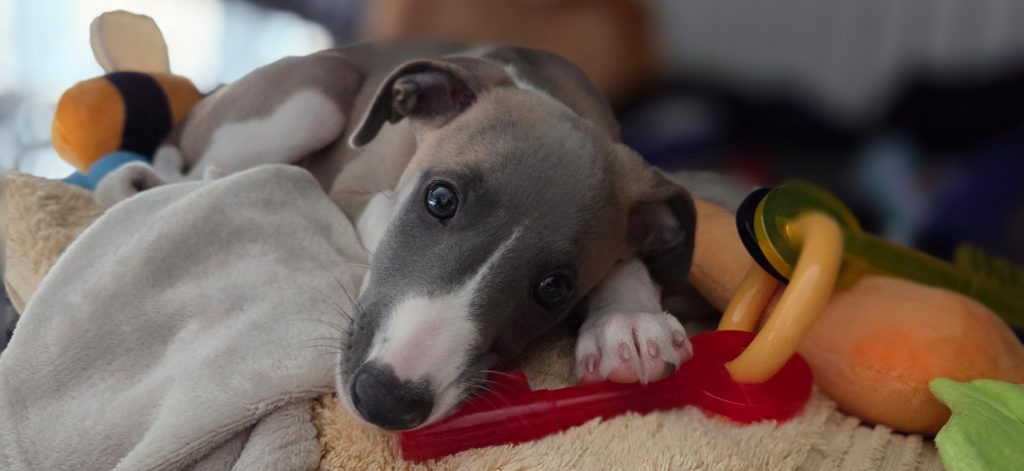
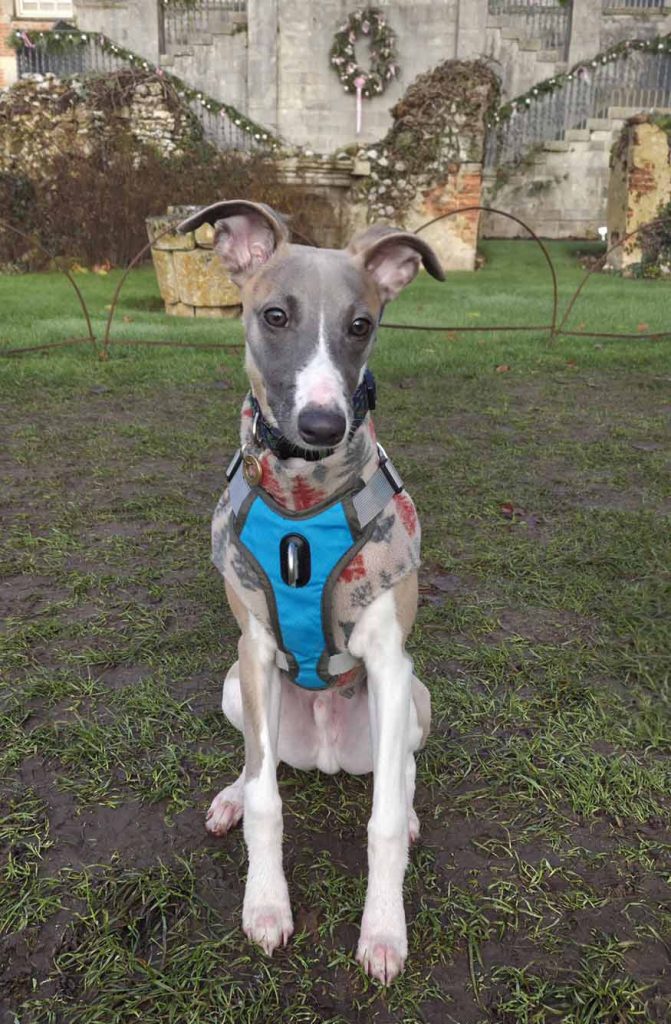
So after seven months of solo walking, I made the decision to get a dog, and a few months later, my ’35 mph couch potato’ whippet, Argo, came home with my partner and I.
Your puppy’s first adventures
Walking the dog is a key part of dog ownership. It’ll become a huge part of your life from the moment you first pick up your puppy. But in the beginning, it’s important to set expectations.
Puppies are babies. They’re still growing, and they’re still learning. To begin with, your first walks with your puppy won’t be the grand hikes you’ve dreamed of. They’ll be little steps, and they may even be within sight of your front door to begin with.
Vets usually recommend not allowing puppies to walk on the ground until a couple of weeks after they’re fully vaccinated, although this can depend on where you are in the country and risks. I’d always recommend following your vet’s advice to ensure you’re doing what’s best for your puppy.
So what do you do before their little paws can touch the ground?
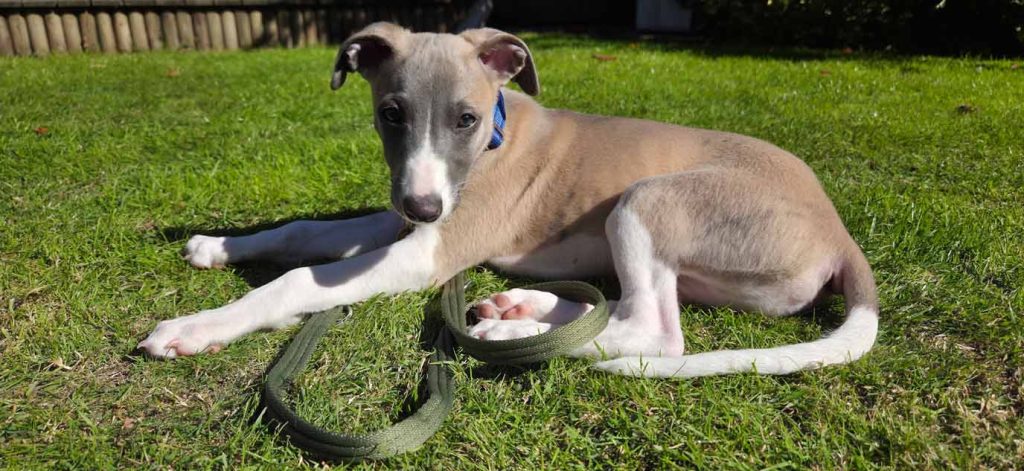
How do you socialise a puppy?
Even if your puppy can’t walk on the ground just yet, you can, and should, take them out on mini adventures with you. Socialisation is a key part of a puppy’s development, and within the first few months you shouldn’t feel like you can’t go out with them.
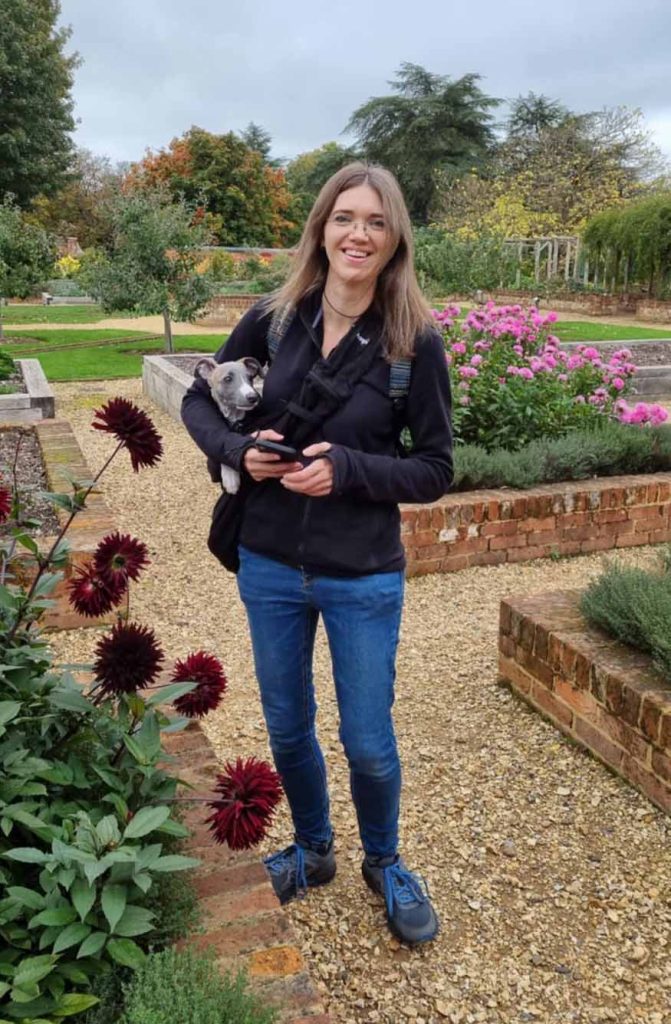
Use a puppy sling or a backpack (or a puppy pushchair if they’re big!), and head out into the great outdoors. Take them to different locations, expose them to new sights and smells. Take them to your local coffee shop, or for a stroll through a forest. Show them all your favourite places and the plans you have for walks with them. You can still spend time in the outdoors together, you just might find you need strong arms and back for the weeks you’re carrying them!
Argo enjoyed his first few weeks in his sling, because he could experience the world with me and my partner safely. He met people (because who can resist a puppy in a sling), other dogs and experienced a range of different locations before a paw even touched the ground. I took him into my local town of Romsey, to National Trust’s Mottisfont, to a nearby nature reserve and into pet shops, as just a few examples.
What are the top puppy walking essentials?
So the time has finally come and your puppy can finally put paws on the pavement. But first, you need to make sure you have the right gear.
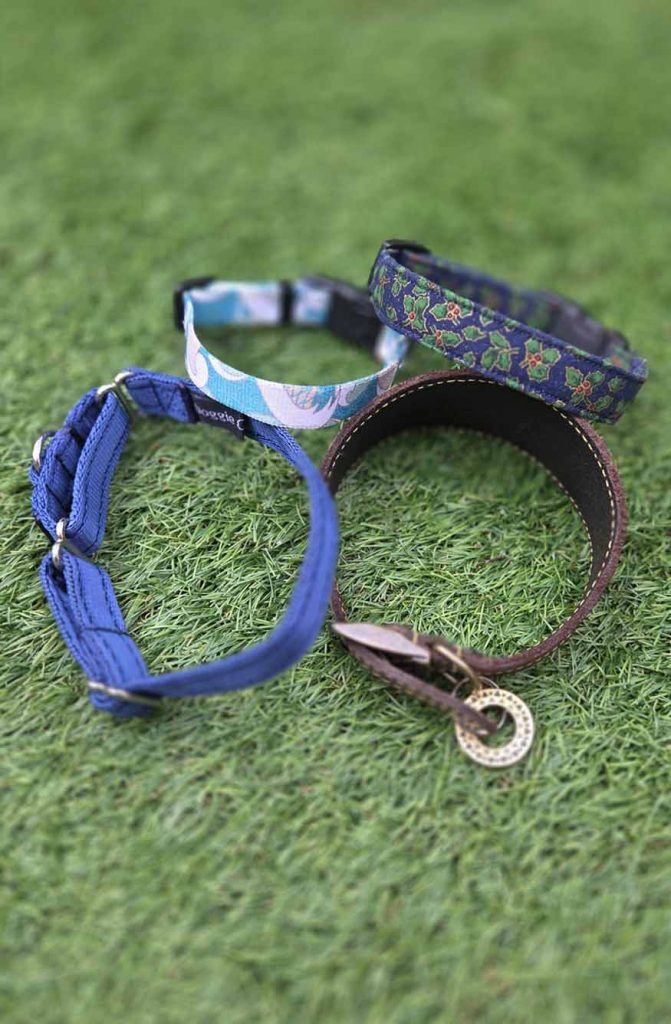
Collar (with tag)
Not only are collars used for walking, but it’s UK law that a dog must wear a collar with an ID tag in public places. At minimum, it must display your name and address. The tag I have includes my phone number too, just in case.
Harness
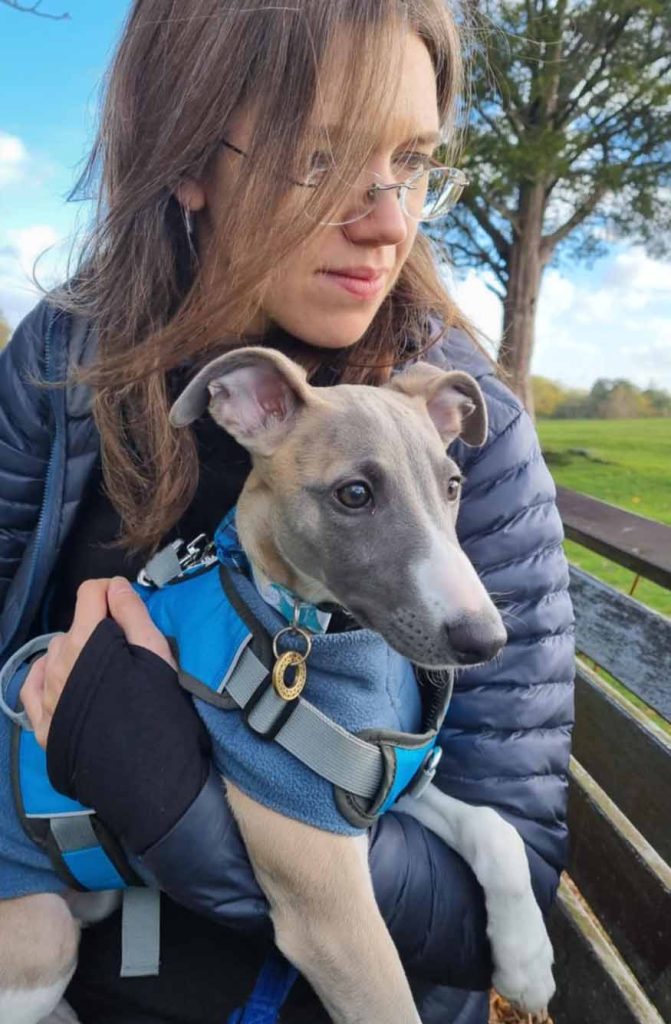
Instead of walking on a collar, you might want to use a harness. There are plenty of different types and brands out there to choose from, some lightweight, others more sturdy. It comes down to what’s best for you and your pup, along with your budget. For help deciding, take a look at our guide to harnesses.
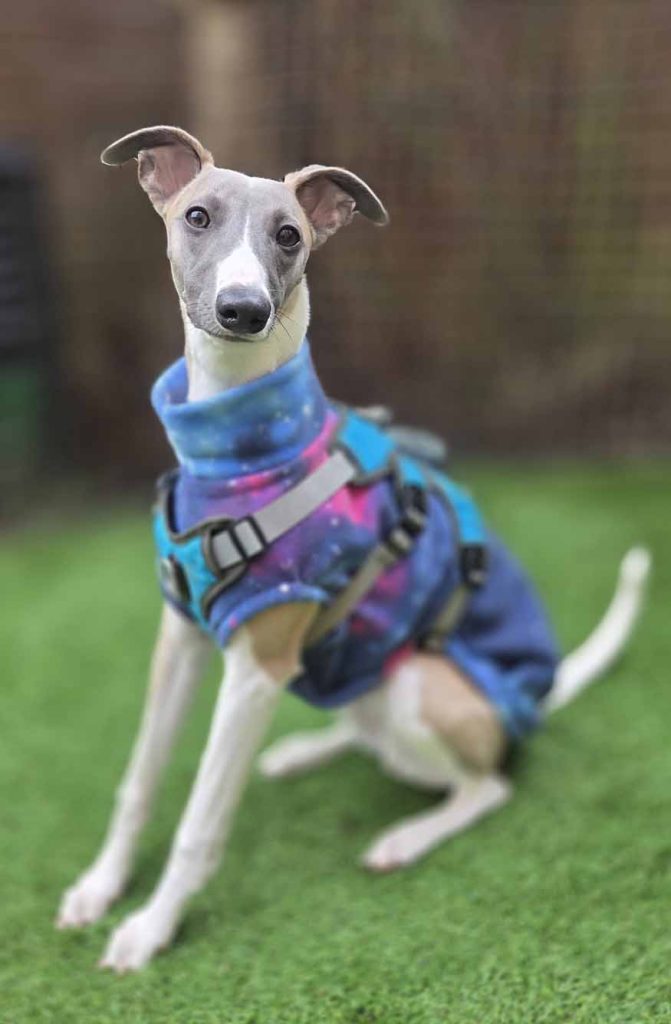
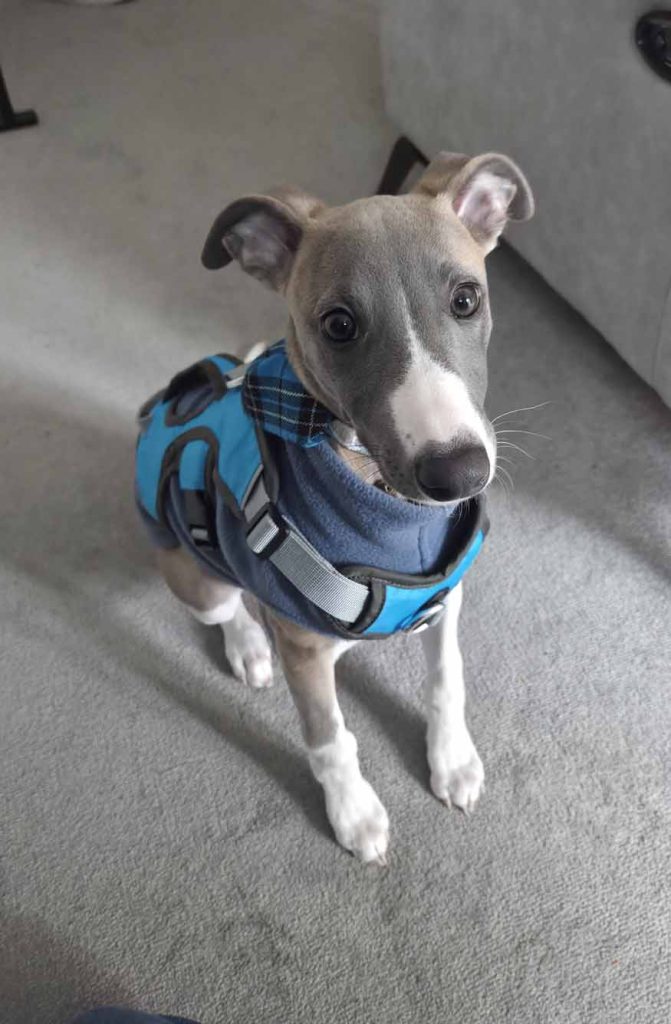
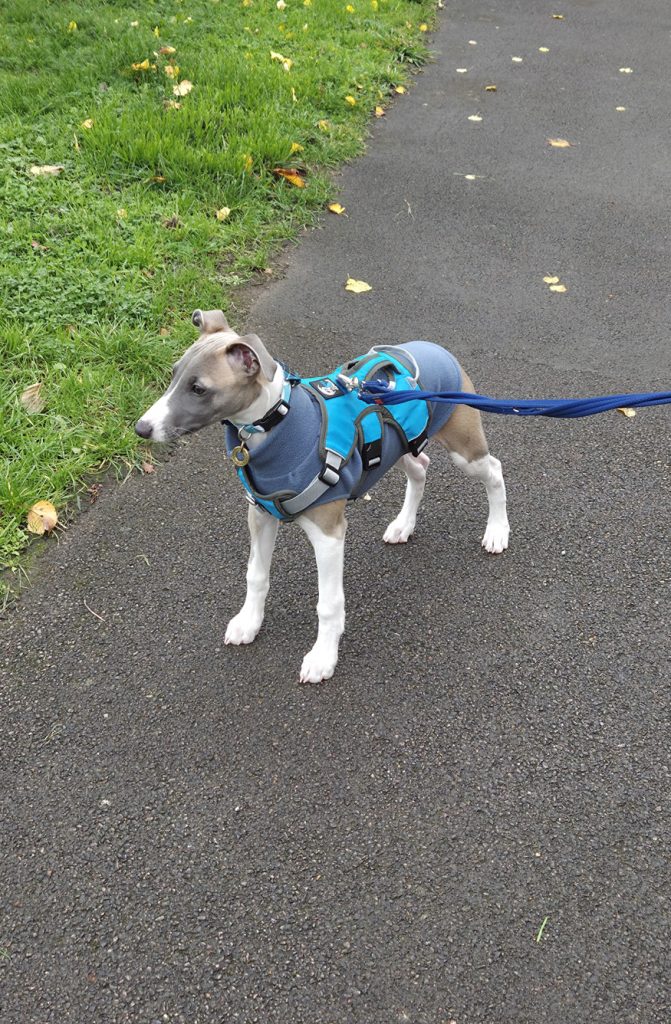
I use a harness for walking, specifically one with three straps, as sighthounds are odd shapes and can easily back out of conventional harnesses. It also has a handle on the back, which allows me to pick Argo up easily if need be. And luckily, he hasn’t outgrown it just yet.
Short lead
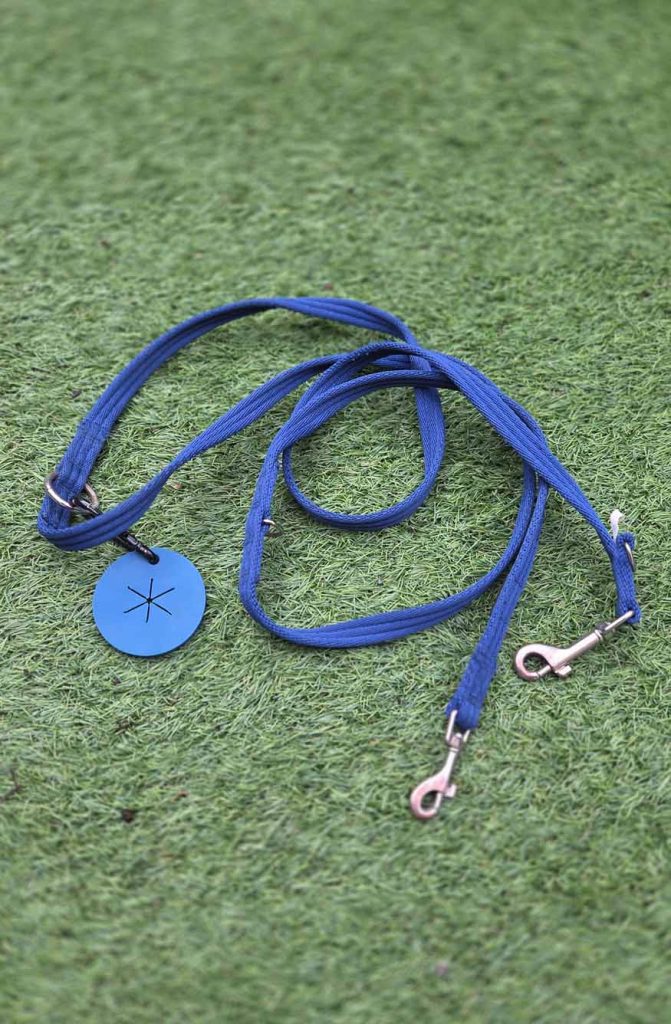
The staple for walking is a short lead. You’ll need to use this to train them to walk nicely and not to pull you along. And believe me, puppies, even skinny whippets, are surprisingly strong when they want to be.
There will always be times you need your dog on a short lead. For example, many dog-friendly places, such as National Trust locations, require dogs on short leads. Other times you might be passing a nervous dog or a service dog, and it’s good etiquette to make sure you have your dog under control.
Long line
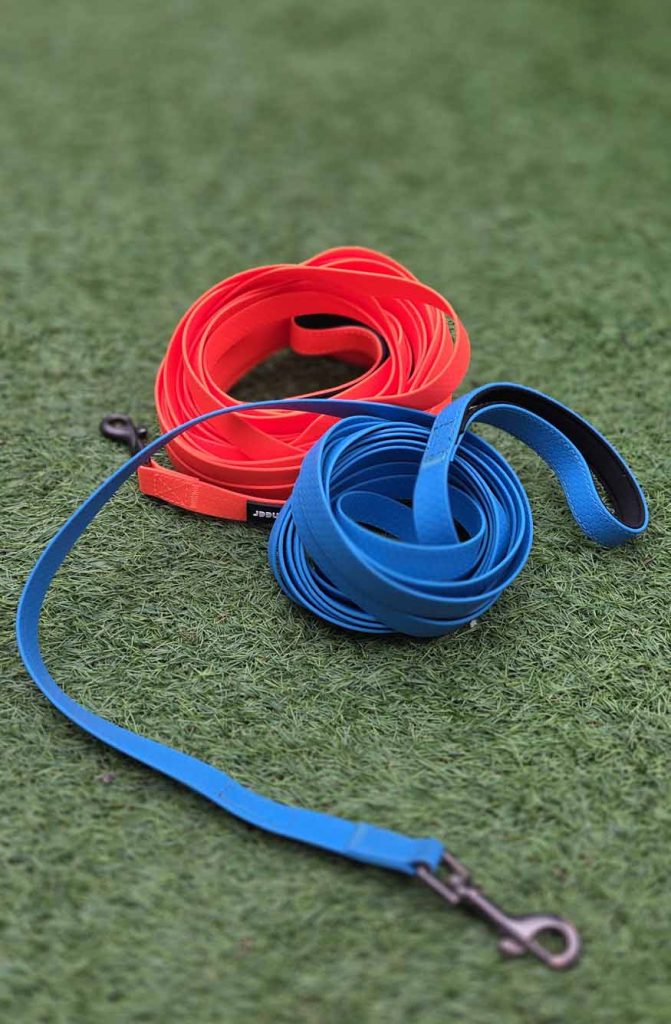
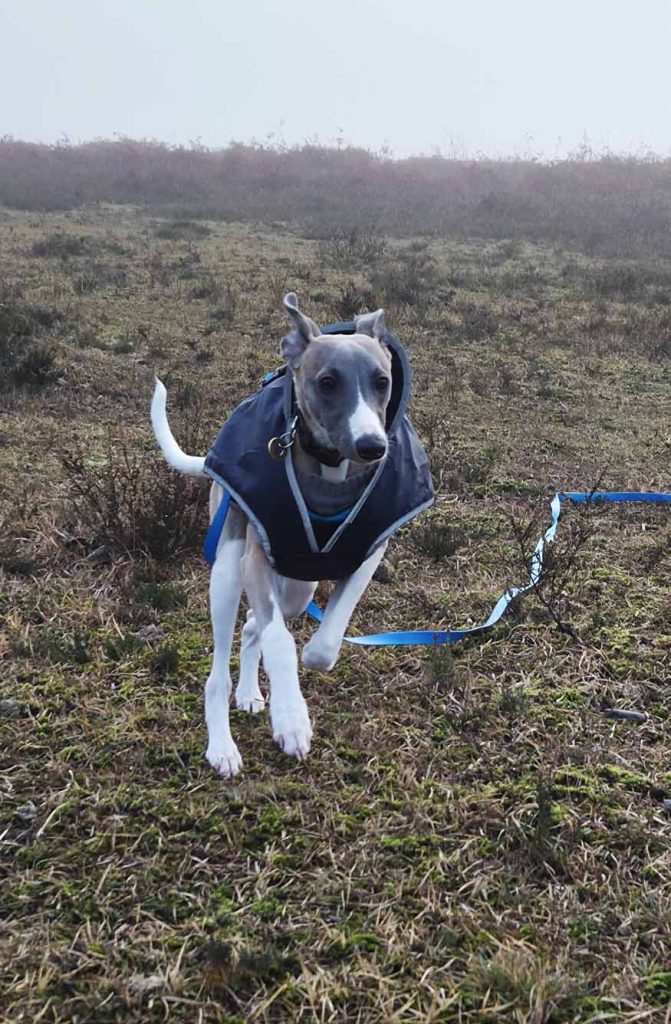
With a puppy who has selective hearing and loves to chase magpies, a long line is great for letting Argo have his freedom, but without the fear he’s going to be out of sight in the blink of an eye. They’re great for practising recall, an essential skill if you want to let your puppy off lead in the future.
I have both a 5m and a 10m long line, although I find I use the 5m one mostly. It’s great for wandering across fields or through woodlands, while always being ready and able to reel him in if I need to (usually because he’s tried to eat something he shouldn’t). You can get either fabric or rubber/biothane leads, of which I have the latter. Since it tends to drag in the mud a lot when I’m out, it means it’s a lot easier to clean and doesn’t absorb water and become heavy as a fabric line might.
Make sure you learn how to use a long line, however, as they can quickly get tangled in bushes or trees, and pose a risk to your puppy if they’re running around or they suddenly bolt.
Poo bags
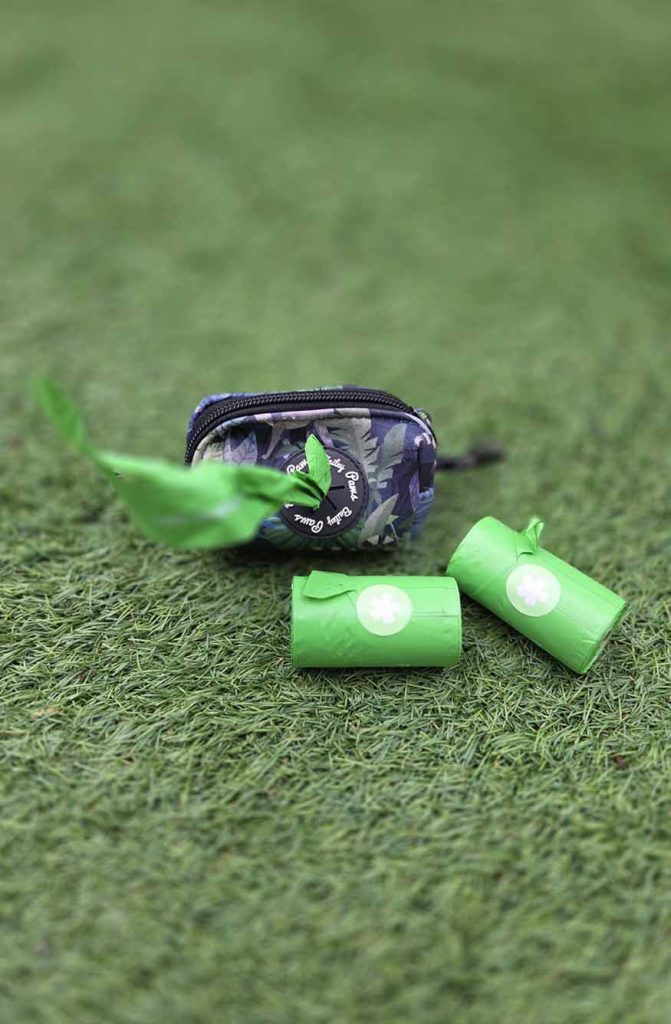
A dog owner essential. Always carry a few poo bags on you when you’re out walking your pup. Don’t be tempted to carry just one, no matter how short the walk. Sometimes puppies can surprise you, and sometimes you might need to double bag! I use a little poo bag holder that clips onto Argo’s lead, so I can be sure I always have enough with me. Eventually though, you’ll start to find poo bags in every pocket of every item of clothing you own, even if you don’t have your puppy with you!
The world of poo bags is a bit of a minefield, with so many different types out there (handles, no handles, scented, unscented, smaller, larger, compostable, biodegradable and so on). I aim to be environmentally conscious, so I did a bit of research into the best kind of poo bag for the environment, and I would recommend doing the same.
Water
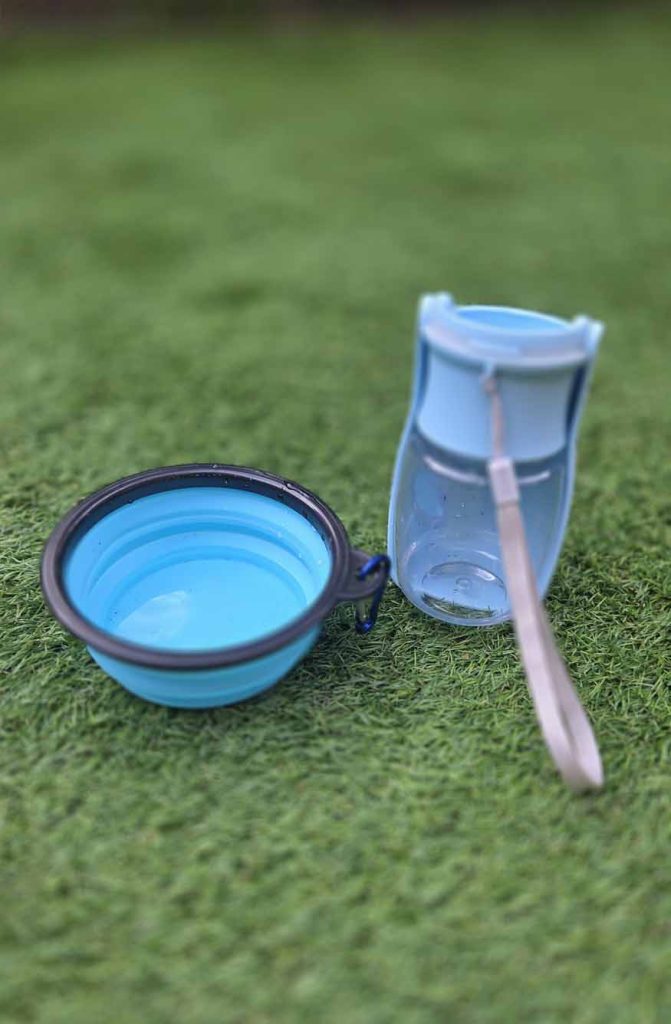
If your puppy is tiring themselves out running about and generally being a puppy, it’s key to have water to hand. You can buy a range of different bottles or bowls for easy carrying when out and about.
I have a bottle that flips open and allows Argo to drink out of the lid, but he’s a fussy creature who’d rather drink out of a muddy puddle. So I also have a collapsible water bowl that’s easy to carry around and clip onto a bag.
Treats
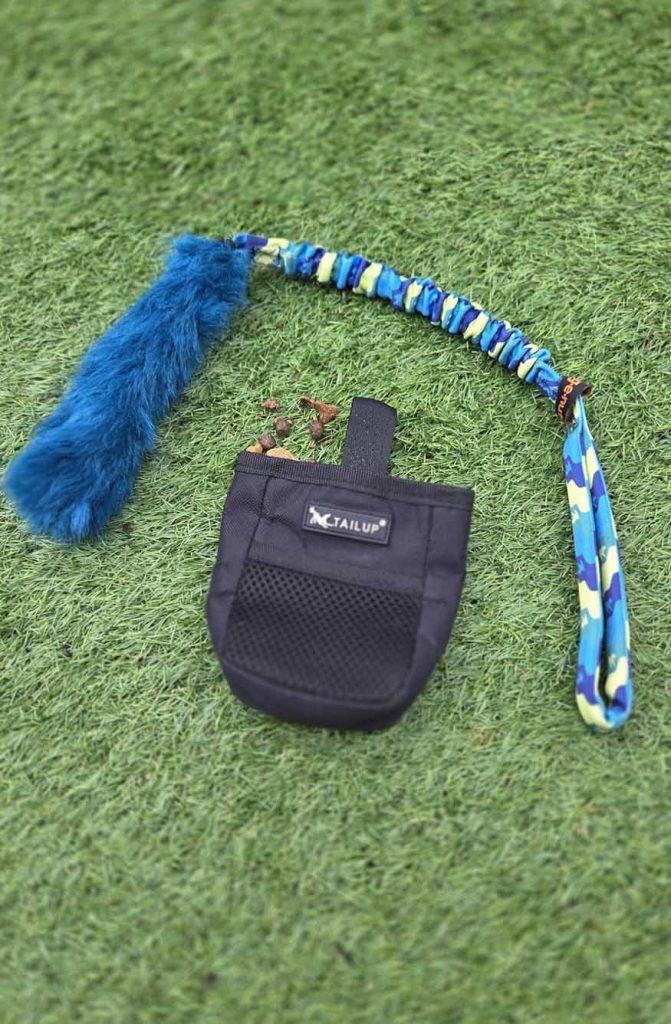
When you’re out about with a puppy, every moment is a learning experience. You’ll want to be ready to reward the correct behaviour and enforce positive association at all times. Carry high value treats, toys or anything that your dog enjoys with you so you can show them they’ve done well. This can be anything from walking well on the lead, practicing various commands while out and about, or interacting well with another dog or person.
If you choose to use a toy, think about having a specific toy for walking or outdoor training. This prevents it from losing its novelty if your pup has access to it all hours of the day. Argo has a fluffy tuggy toy he loves, and he only ever gets to play with it as a reward when we’re out and about.
Coats and rain jackets (if necessary)
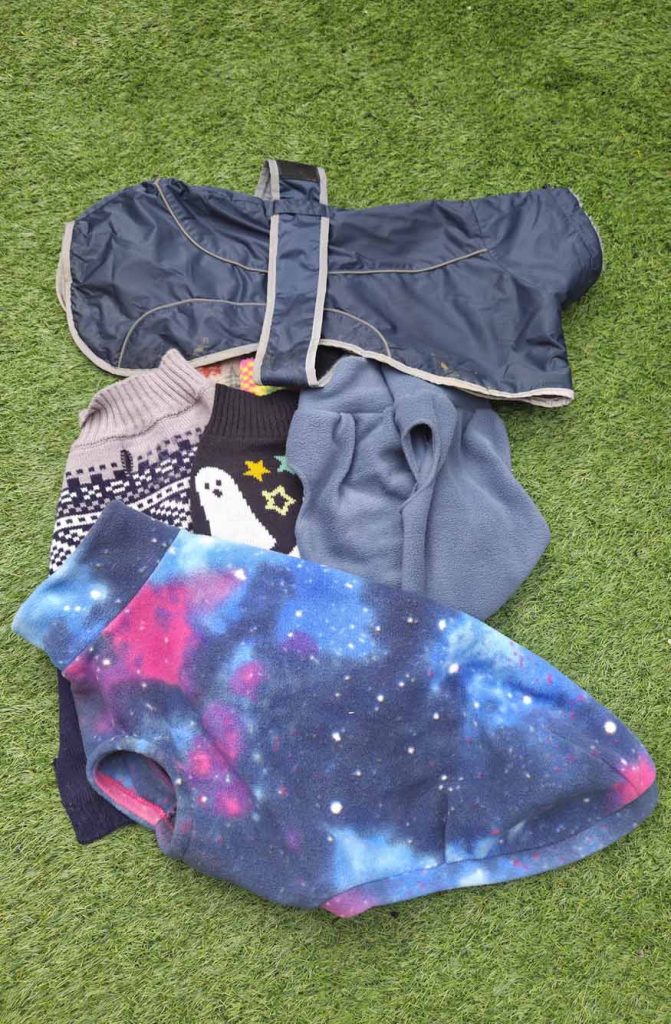
Depending on your dog, you may or may not need fleeces or rain jackets. But remember, you have a puppy. Puppies grow, and quickly, so don’t be tempted to spend too much on them to begin with. Alternatively seek out second hand options.
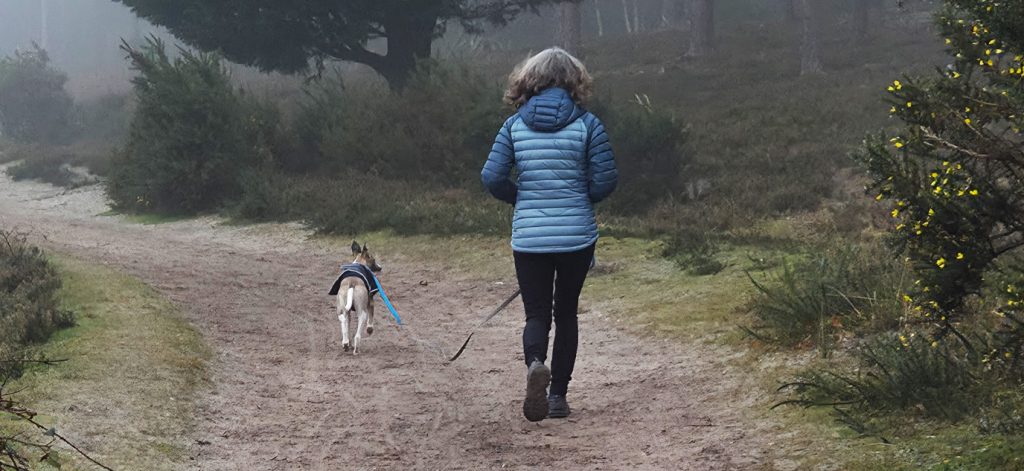
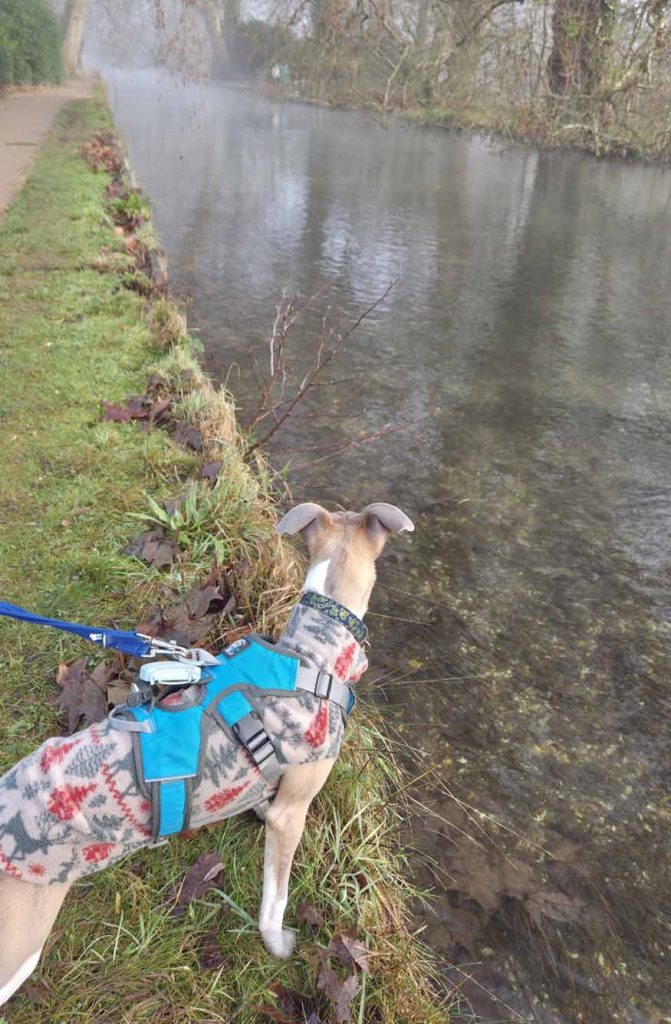
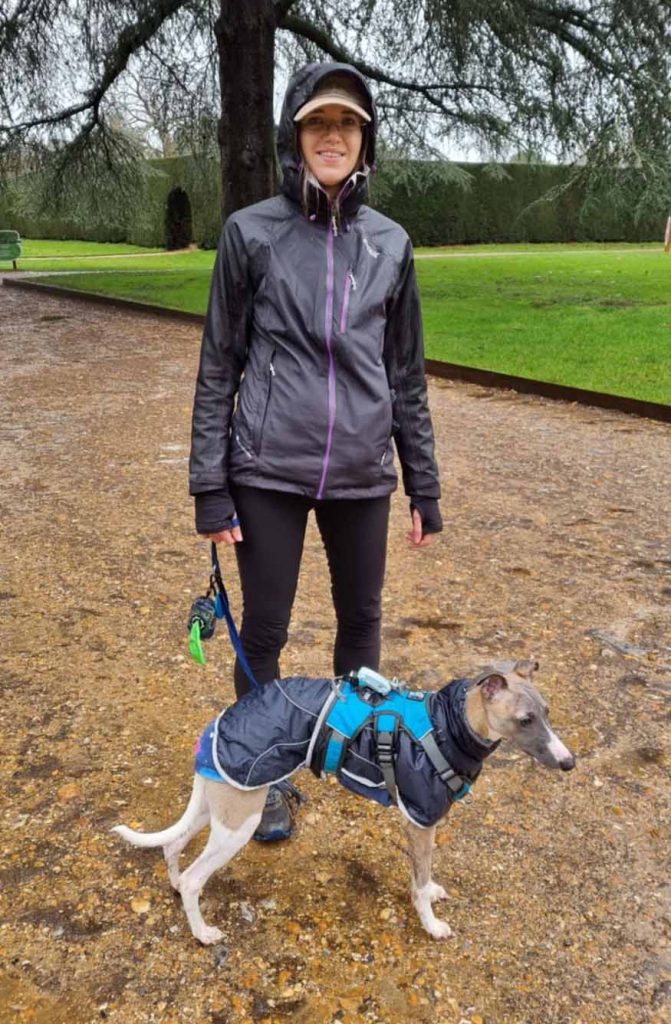
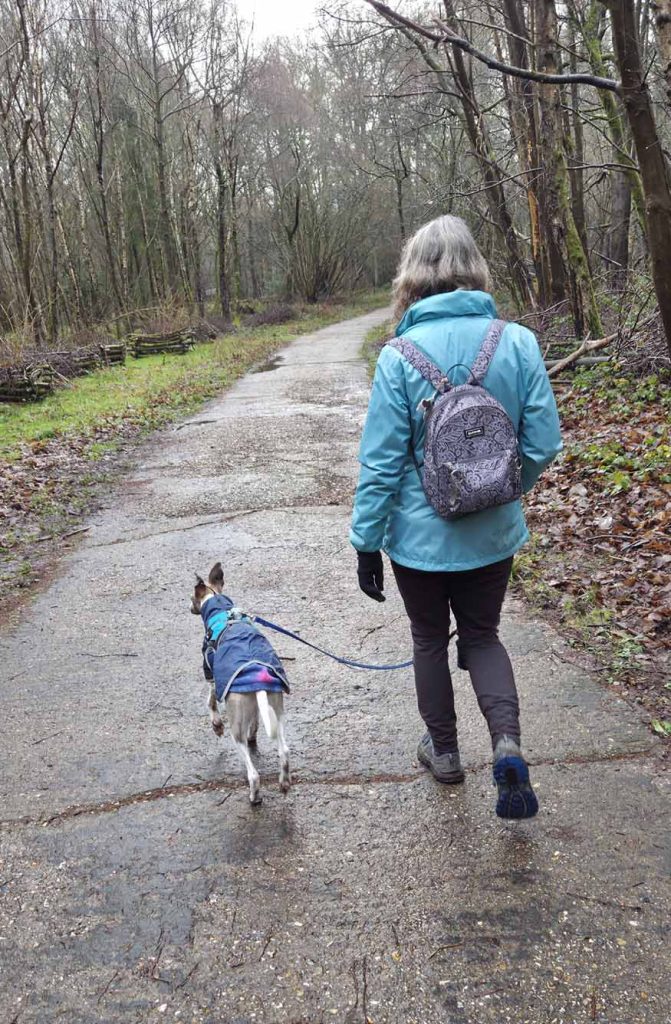
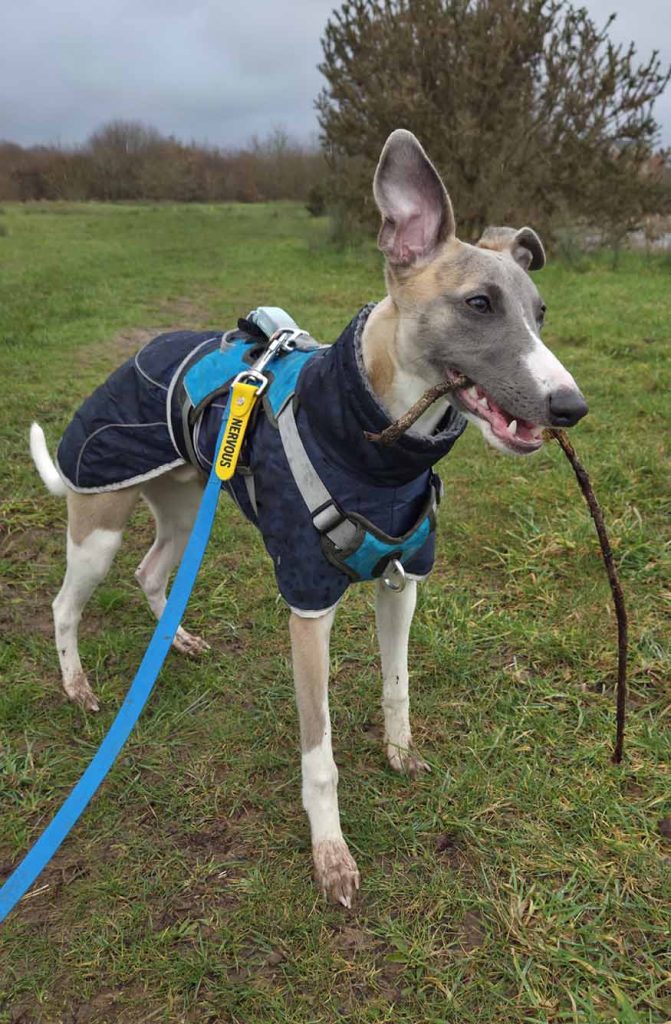
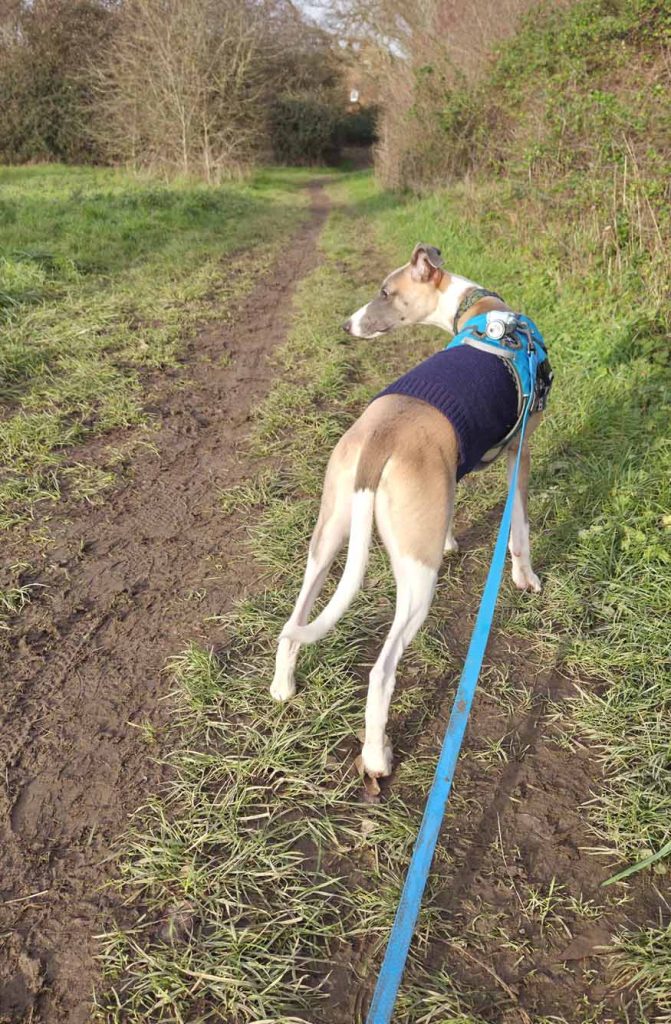
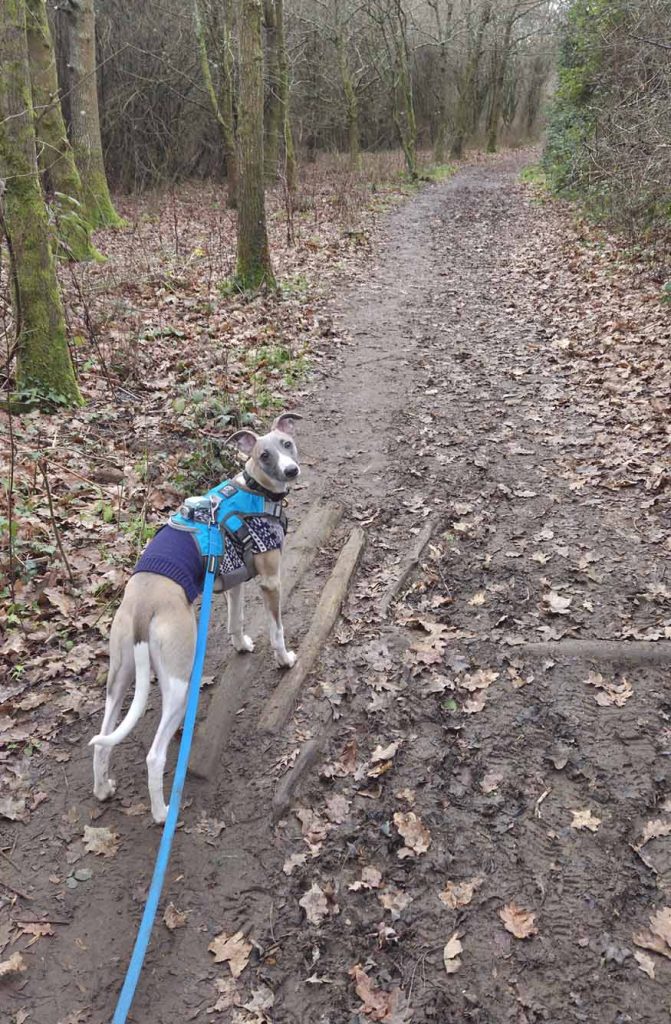
As Argo is a whippet who gets cold easily and dislikes the rain, in the four months I’ve had him, he’s gone through six fleeces and two rain jackets (which means the images in this post look like a puppy fashion show). I look forward to the day when I can buy him one nice coat and be done!
GPS tracker (optional)
With a puppy that can be here one minute and gone the next, and the paranoia of a first-time dog owner, I have a GPS tracker on Argo’s harness. Some trackers are a single payment, others require a subscription, so you can find the one that suits you best.
So far, I’ve not had to use it because of him bolting, but I do enjoy the activity tracking (and competing with other neighbour dogs over activity time), and that you can record walks as if you might with your own human activity tracker.
EXPLORE THE
OS Shop
We are with you every step of the way. Shop our trusted walking and hiking maps and guidebooks so you can explore the outdoors with confidence.
Go to the shopHow do you take your puppy on their first walk?
As I’ve mentioned, walking puppies is a slow process. Don’t expect to be going out and tackling some of the best dog walks around or climbing up mountains just yet.
Puppies may be full of energy and at times if might feel as though they could tackle Ben Nevis, but that energy is finite and they need their sleep (between 18-20 hours a day!). The more tired they get, the more likely they are to act out, and an overtired puppy is a bitey puppy!
Not only do they need their rest, but they also need to be careful with how much they walk and strain themselves. Puppies are still growing and too much strenuous activity can cause unnecessary stress and lead to joint issues in later life.
Tips are to avoid hard surfaces, such as concrete or tarmac, and stick to grass or other soft surfaces at first. Also reduce the need for jumping up and down to further protect their joints.
How far can I walk my puppy?
It’s best to take things slow and one step at time. Recommendations vary on how much exercise a puppy should have, but a rough rule for the length of a walk is five minutes x age in months. For example, if your puppy is four months old, they can have one or two walks of 20 minutes a day.
While this might seem restrictive if you’re raring to get out there an explore, these short walks are just as beneficial as long ones. And it’s often better to be safe than sorry with your dog’s future health.
What should my first puppy walks look like?
Firstly, there’s no way they ‘should look’. All puppies are different. Some might take to walking, while others might take some time to get used to it.
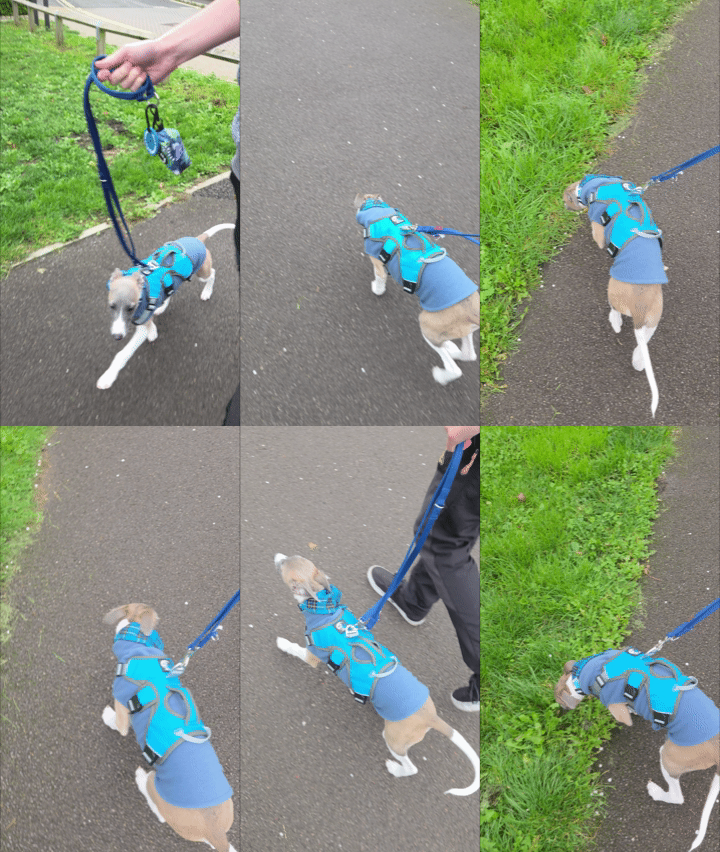
In the beginning, for me, they were tricky. Don’t always expect your pup to walk perfectly. While you can practice lead walking indoors, the outdoors is new and exciting. Think of all those new smells and sights. They might not know what to do with themselves, and they may pull, they may zigzag and they may get under your feet.
Walking takes time, and that’s okay. There’s more to a walk than just clocking up the miles or getting from A to B. For puppies, its about experiencing the outside world, learning and growing in confidence.
How do you plan your puppy’s first walks?
To help them, and you in the future, when planning your puppy’s first walks, think about where you’re walking them.
What are they walking on? Think about textures and difference surfaces, such as grass, tarmac, gravel, sand or wood chips.
Let them investigate these surfaces, let them sniff flowers, lampposts, hedges, whatever takes their fancy (just not anything toxic!). A good 20-minute sniff is said to be as tiring as a walk – so a ‘sniffari’ is always a great outdoors option with your puppy.
What are they going to encounter? Think about what they’ll see on their walks. People, cars, other dogs, bikes, pushchairs, or livestock.
Try to expose them to as much as possible, but know their limits. You want a confident puppy to go adventuring with, but that doesn’t mean forcing them to do something they’re afraid of. They don’t have to interact with every person or dog. In fact, to begin with, it’s best they don’t so they focus on you before any distractions.
As a slightly nervous puppy, Argo is unsure of young children and wary of other dogs. He’ll stop walking or sometimes turn and try to run away. So we stop and pause at a distance he’s comfortable with. And when they’re passing, he gets treats and positive reinforcement.
Just remember when walking your pup to keep an eye on them at all times. If they’re anything like my puppy, everything goes into his mouth in a flash and Argo loves nothing more than to pick up the most dangerous of things (some things I’ve fished out of his mouth include half a chocolate bar, a cigarette butt, a hair tie, a clump of hair and a few large stones, to name but a few). Puppies explore through their mouths, but they don’t always know what might be dangerous to them.
How can OS Maps help you as a new puppy owner?
Planning your puppy’s early walks is all about keeping things safe, controlled, and positive, and OS Maps makes that so much easier.
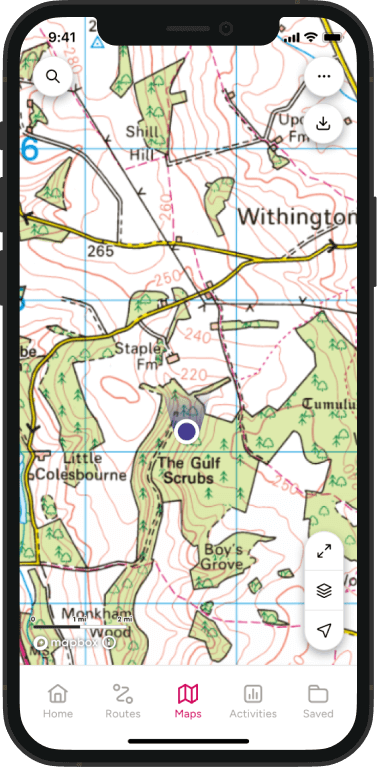
You can clearly see distances and keep routes short for little legs. OS Maps lets you map out a route and see exactly how long it is, so you don’t accidentally end up miles from home or stuck in a loop that’s too long for a your pup. You can also easily plan circular walks back to the car or home.
With OS mapping you get a proper look at the terrain, as not every surface is ideal for a puppy’s first steps. You can check whether you’ll pass through busy areas that might feel overwhelming, whether the route is paved or grassy or where hills or steep sections are.
OS Maps is also great for trying new places without getting lost or discovering safe, quiet places. If you want to explore somewhere new, like a country park, woodland, or nature reserve, OS Maps gives you confidence you won’t take a wrong turn. It’s perfect for puppies who are learning to walk calmly, because you can stay focused on them instead of worrying about navigation.
EXPLORE THE
OS Shop
We are with you every step of the way. Shop our trusted walking and hiking maps and guidebooks so you can explore the outdoors with confidence.
Go to the shopWhat are the benefits of puppy walking?
Dogs, especially when they’re puppies, are a great way to make you slow down and pause. They remind you that you can take the outdoors at a slower pace, and any time spent in fresh air is beneficial.
A puppy might stop for things you never thought to look at. Leaves, puddles, flowers. Things you might otherwise walk past without a second thought will be brought to your attention to you by their investigation.
When they’re young, there’s nothing quite like watching your puppy explore the outdoors. So many things will be their first. Their first walk on grass, their first walk in the rain, their first encounter with a cow. The everyday things you take in your stride take on a new light when you watch your puppy experience them.
It’s no secret that raising a puppy is hard work. But I’ve found the moments outdoors are a welcome break and brilliant for mental wellbeing. They also help strengthen your bond with your puppy, building trust and improving communication.
What is puppy walking etiquette?
When walking your puppy, there’s general etiquette to be aware of for responsible dog walking. This makes sure that you and your dog enjoy your walks, but also ensure that both other people, their dogs and the countryside are respected.
Clean up after your puppy
Always pick up your dog’s poo, and either deposit it in a dog waste bin or carry it home if no bins are available. Not only is leaving waste behind unsightly, but it’s also an offence, as dog poo can cause infections and diseases in other animals.
When walking on lead
Be mindful of how your dog interacts with other dogs. While on a lead, your puppy might react differently than if they were off lead. By being on lead, you can ensure that your dog is not forced into greeting other dogs if they don’t want to.
It’s important to remember that while you may want your puppy to be social, they don’t need to greet every dog they pass. It also means that you can give other dogs, like nervous dogs, the space they require when walking past.
When walking off lead
If you’re comfortable with your puppy being off lead and they have reliable recall, be aware of dogs on lead. Direct them away, as owners may have their dogs on leads for various reasons, such as training, nervousness or reactivity.
When your puppy is off lead, always keep an eye on them to make sure they don’t wander off or go places they shouldn’t. If your puppy doesn’t have good recall, think about whether it might be best to keep them on lead
If you’re concerned about your puppy not getting enough free time to run around, there are plenty of enclosed dog paddocks you can hire, often with six foot fences. As my puppy isn’t all that reliable with returning when called, he gets taken to one regularly to have a chance to run without fear or disappearing or bumping into other dogs he might not feel confident around.
Follow the Countryside Code
The Countryside Code is important to remember, and includes remaining on marked paths, keeping your dog under control and respecting nature. With or without a dog, these are principles you should always be aware of when heading into the outdoors. The key aspects are:
- Respect everyone
- Protect the environment
- Keep dogs under control and bag their waste
- Manage gates and property
- Plan ahead to stay safe
- Protect wildlife and livestock
Puppy walking FAQ
It’s possible, although it’s often hard to tell. Puppies can’t tell us when they’re tired, so it’s best to keep to shorter walks to be on the safe side.
If you’re unable to walk your puppy for whatever reason, play and mental stimulation is always a great way to interact with your puppy. Use toys, do some tricks, play ‘find it’ games or use puzzle toys. There’s plenty of ways to give puppies the stimulation they need.
Absolutely. Puppies explore the world primarily through their nose, so they’re learning something new with every sniff. Ever scent tells them who’s walked by, what’s changed since they last passed through and what’s going on. If you puppy wants to sniff, let them.
Puppies can be more sensitive to weather than adult dogs, so it’s important to be aware of varying conditions.
For hot weather, avoid walking in the middle of the day when pavements can become too hot for little paws. A simple test is to put the back of your hand on the pavement. If it’s too hot for you to hold it there for a couple of seconds, it’s too hot for your puppy.
For cold weather, keep walks short, especially if it’s windy. For small or short-haired breeds, they may need a jacket to stay warm – just like Argo. If there’s snow or ice, be mindful of cold paws, and wipe paws after a walk to remove any grit or salt.
As puppies are naturally curious, they’ll pick things up in their mouths. While it’s natural behaviour, you’ll want to be able to manage it in case they pick up anything dangerous. The ‘leave it’ command is invaluable, as is rewarding your puppy for checking in with you rather than grabbing something they want. It’s worth reading up on what’s danger to puppies, from toxic foods to plants, so you can be especially vigilant when out walking.

Ready to get outside with your puppy?
Learning to navigate the outdoors with your puppy isn’t something that will happen overnight. Sometimes there will be good days, when you think you’ve finally cracked it, and then the next day you’ll feel as though you’ll be back and square one.
But you’ll get there eventually.
Argo is now six months old and I’ve started to take him to all the places I’d walk and think how nice it would be to have a dog with me. A local canal walk. A nature reserve. More National Trust properties. The New Forest. All familiar places, but now refreshed with him at my side. And I still go out with my original walking buddy, my mum, just now with Argo in tow.
I also know that having him will take me to new places where I can experience more of the outdoors. After all, there are countless places across the UK that are perfect for dog walking, from coastal paths to mountains trails, to city parks and local pub routes. And if you take time get outside with your puppy, you’ll have plenty of dog-friendly adventures together across Britain too.