ABP Southampton Marathon Festival & Ordnance Survey

Get ready for one of the South Coast’s biggest and most inspiring running events: the ABP Southampton Marathon Festival, proudly partnered with Ordnance Survey.
With more than 10,000 runners taking part across three major races and a family-friendly fun run, this iconic festival on 3rd May 2026 brings the city to life with energy, landmarks, and unforgettable moments.
This year, the event takes on an even deeper connection to Southampton’s rich heritage. All races will start from the historic Dock Gate 8, tying the festival directly to the city’s maritime past. And in a breath-taking nod to local history, the day will open with a one-of-a-kind Spitfire display, featuring the beautifully restored Supermarine Spitfire RR232, a powerful tribute to aviation innovation born right here in the region.
This isn’t just a run through a city. It’s a run through history.
Want to get involved in the ABP Southampton Marathon Festival?
Ready to jump in? Find more information on the ABP Southampton Marathon Festival’s official website. Not only are there details on how to sign up, but you can find out what the day has in store beyond the races.
Did you know?
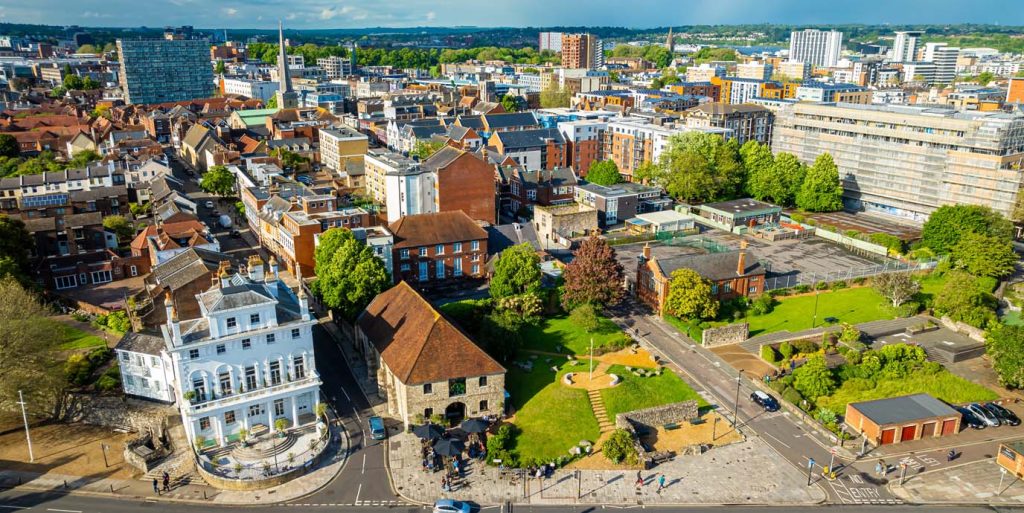
Southampton welcomes around 1.7 million cruise passengers a year
OS Maps & the ABP Southampton Marathon Festival Routes
The official ABP Southampton Marathon Festival routes are now available in OS Maps, giving you the perfect opportunity to familiarise yourself with the courses before race day.
Whether you’re tackling the 10K, half marathon, full marathon, or the fun run, OS Maps lets you preview every turn, plan your pacing strategy, and feel fully prepared long before you arrive at the start line.
To help you prepare even better, you can access OS Maps with a free three‑month trial, giving you full use of its premium features as you train, plan, and familiarise yourself with every kilometre of the course.
Did you know?
Ordnance Survey relocated to Southampton in 1841.
A route steeped in Southampton’s history
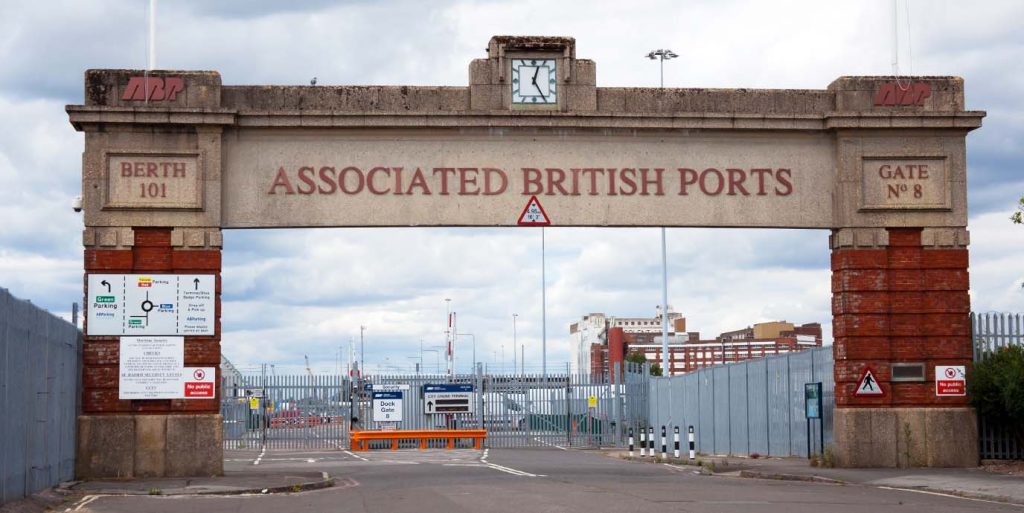
An iconic start at Dock Gate 8
With this year’s races starting at the historic Dock Gate 8, runners set off from a gateway that has connected Southampton to the world for generations. Once a bustling entrance to the historic Western Docks, Dock Gate 8 roots every participant in the city’s deep maritime heritage from the very first stride.
Built in the 1930s, the dock gate is an art‑deco landmark created by the Southern Railway Company as a true “gateway to the world,” reflecting the style and optimism of Southampton’s great ocean‑liner era. During this period, Southampton had become a major hub for global passenger travel, so much so that by 1936 it handled 46% of all UK ocean‑going passengers
With very few inter‑war dock gateways surviving today, Dock Gate 8 stands as a rare and striking reminder of that historic 1930s boom.
From the dock gate, the full marathon route passes numerous further historic locations:
- Mayflower Park – you pass the very spot where the Mayflower set sail in 1620, beginning its famous voyage to Plymouth before setting off for the New World.
- The Docks where the Titanic Departed – a poignant stretch of the course takes you by the entrance to the docks used by the RMS Titanic in 1912, a global story forever tied to the city. After your run, visit SeaCity Museum if you’d like to learn more about Southampton’s connection to the ship and crew.
- The Itchen Bridge – crossing this sweeping span offers striking views of the waterfront. Completed in 1977, it is one of Southampton’s most recognisable modern landmarks.
- St Mary’s Stadium – home to Southampton FC, the route runs directly through the stadium bowl, giving you an unforgettable on-pitch moment.
- Northam Bridge to Bitterne Manor – as you head across Northam Bridge, you reach Bitterne Manor, believed to be the site of Clausentum, a Roman settlement dating back nearly 2,000 years.
- The University of Southampton – a nod to the city’s innovation and research excellence, you pass one of the UK’s leading universities.
- Southampton Common – a peaceful, green section of the route that has been a part of local life for centuries.
- The Bargate – one of Southampton’s most iconic medieval landmarks, built in the late 12th century as the grand entrance to the walled town.
- Holyrood Church & the Titanic Crew Memorial – this medieval church, now a memorial garden, stands alongside a tribute dedicated to the Titanic’s crew, most of whom were from Southampton.
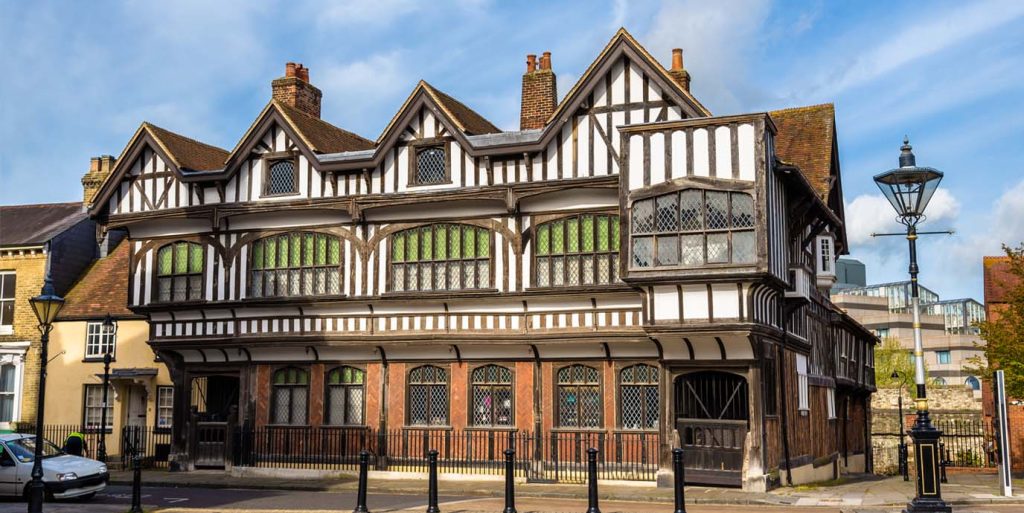
- Tudor House – finally, you pass one of the city’s oldest and most treasured buildings, now a museum with over 800 years of history behind its walls.
Did you know?
Southampton is twinned with Le Havre (France), Rems-Murr-Kreis (Germany), Trieste (Italy) Hampton (Virginia, USA), Qingdao (China), Busan (South Korea) and Miami (Florida, USA).
EXPLORE THE
OS Shop
We are with you every step of the way. Shop our trusted walking and hiking maps and guidebooks so you can explore the outdoors with confidence.
Go to the shopSouthampton in maps – then & now
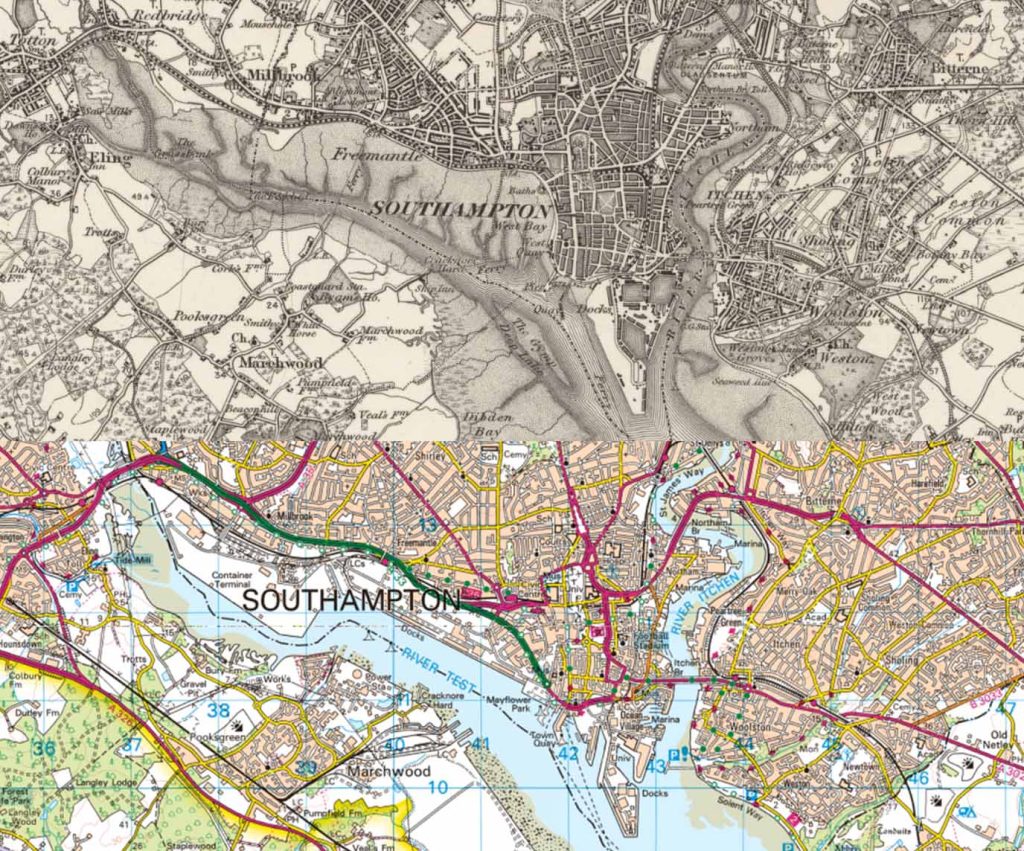
Southampton is a city that’s changed rapidly over the years, expanding and growing to become a world-class post and city. As OS has called Southampton home for over 150 years, nothing shows the changes better than our mapping. Seeing historical maps side-by-side with modern mapping visually illustrates the city’s evolution.
Taking a look at these two maps, one from the 1896-1904 series and the other today’s modern Explorer OL22, the most dramatic change is the docks. On the historic map, the River Test shoreline is far narrower and more natural, with mudflats and open banks dominating the waterfront. In the modern map, this area is almost unrecognisable as the result of extensive land reclamation and dock expansion.
The maps also show how once‑separate communities have grown. Totton and Millbrook, which appear as small, semi‑rural settlements on the old map, are now fully developed and seamlessly connected to the wider city. Where fields once filled the space between these areas, the modern map shows dense housing, industrial sites, and major road networks.
The early‑1900s map shows only basic road links and limited river crossings, while the modern map includes major trunk roads and the Itchen Bridge, a crossing that wasn’t built until 1977. This shift reflects Southampton’s transformation into a modern port city built around movement, logistics, and large‑scale maritime industry.
If you want to pour over more changes across Great Britain in the last century, take a look at our collection of maps from 1896-1904.
Did you know?
Southampton’s first docks officially opened on 29 August 1842.
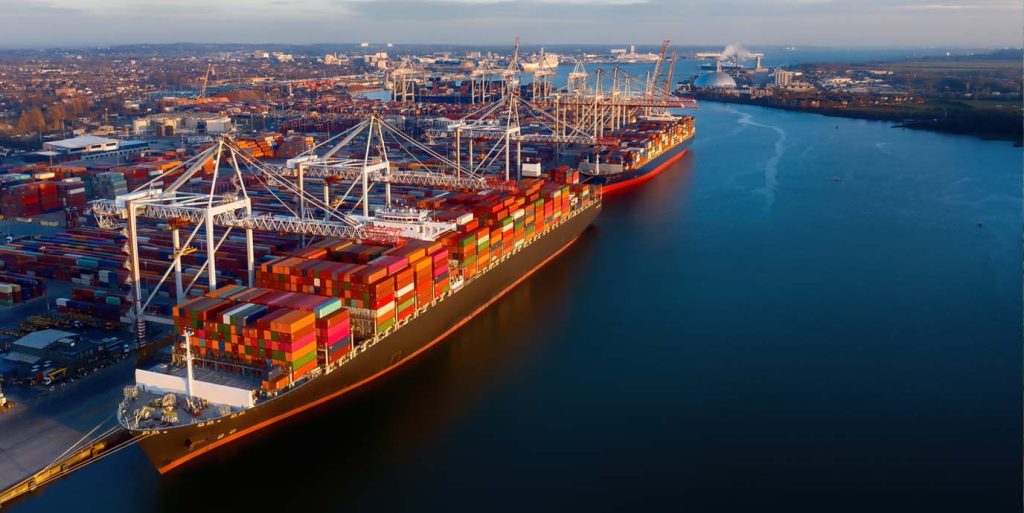
Ready to take on the challenge and experience Southampton’s history?
Don’t wait – sign up for the ABP Southampton Marathon Festival today!
If you’re prepared to tackle one of the four races, good luck with your training and, of course, the event itself! Keep an eye on ABP Southampton Marathon Festival’s emails and social channels for more inspiration and tips to keep you motivated.

In the late-1930s, Southampton was home to the Supermarine factory. Spitfires were made by Supermarine until the factory was destroyed during heavy bombing in the 1940s. However, even after it’s destruction, Southampton continued to build spitfires. Their production was split up across the city, making use of a range of secret pop-up workshops such as garages and bakeries.

Want to explore more of Southampton?
Do you want to make the most of a visit to Southampton and explore beyond the marathon? Southampton and Hampshire is home to some of the most beautiful locations in the country, such as the New Forest National Park, making it a perfect destination for outdoor adventure.

Best Running Routes in Hampshire to Train for the ABP Southampton Marathon
The best running routes in Hampshire, ideal for training for the ABP Southampton Marathon! Starting from a short park run through to a 16 mile run to really push you!

Nutrition for Marathon Training
EXPERT ADVICE: Nutrition for marathon training. Tips from Ordnance Survey Marathon runners.
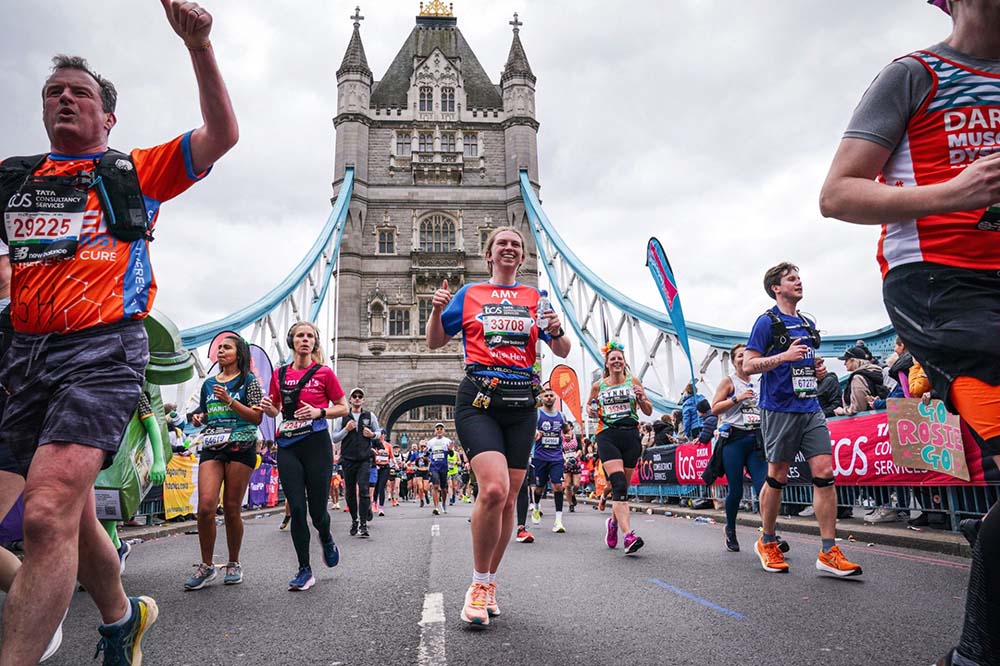
Why do people run Marathons?
Why do people run marathons? Ordnance Survey has teamed up with our friends at APB Southampton Marathon to explore all the reasons…