I really like going for muddy trail runs with the dog (much better than pounding the pavement), and like discovering new outdoor areas. Add a treasure-hunt style challenge and voilà, you’re orienteering.
You don’t need any technical kit, it’s very affordable and there are events held most weekends in rural and urban areas, as well as dozens of fixed courses in forests and parks across Britain that are FREE.
It’s one of the most fun ways to get outside for a few hours.
TQ 280 860
Orienteering – for many of us, the word throws up dark school-day memories of running around with a map and compass feeling a bit lost, waiting for the PE lesson to be over.
That was pretty much my experience too, but I’ve rediscovered the sport as an adult and now absolutely love it – it’s like a treasure hunt open to grown ups. It’s a fantastic way to turn a walk or run into a game, discover new outdoor areas and improve (or learn) navigation skills at the same time.
The basic principle in an Orienteering race is that you navigate your way around a set of locations that are marked on a map. Some people sprint their way around the course aiming for the fastest time possible, others are trying to beat their own personal best, other people have brought the family, the dog, a picnic, and turn it into a day out.
Most events have a range of courses and beginners are welcome. There are often courses that stick to paths that are wheelchair or pushchair accessible and there’s even a version of orienteering called Trail-O that isn’t about speed at all, but all about navigational accuracy.
As well as special events, there are also fixed orienteering courses, where permanent wooden posts are located around a woodland or park, and you can time yourself (and challenge your friends!) around the course whenever you like.
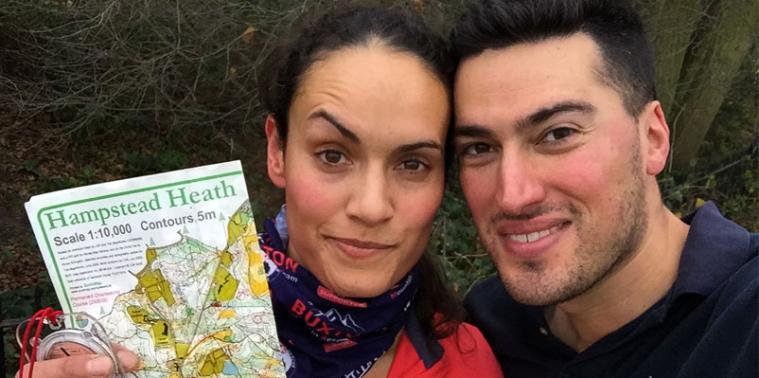
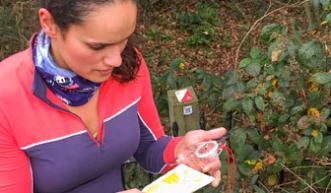
Hampstead Heath in north London boasts a permanent orienteering course. My husband Joe and I decided that we’d set ourselves a #GetOutside challenge to run to as many of the control points as we could in 45 minutes, turning a (potentially) boring jog into a fun game. We collected a map from the info kiosk that shows the locations of all the posts (you can also print the map off online). It’s a large 1:10,000 scale, with lots of detail to help you navigate.
Even though we were only racing against ourselves, I could still feel a buzz of adrenaline as we levelled the map and pressed ‘start’ on the stopwatch.
We knew we wouldn’t be able to get to all the 24 control points on the map so first off, we had to decide our tactics: aim for as many points as possible, but not so many that we’d get caught out and not get back to the finish point in the time allowed.
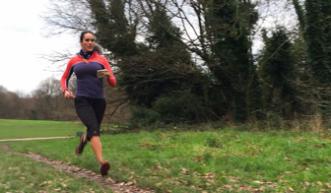
It was a Saturday afternoon and the paths were busy – it was exciting to go ‘off piste’ and gallop across the rough grassland and into the woods. We got a few looks from people wondering what we were up to, and if we hadn’t been against the clock we’d have stopped to tell them about it!
Checking off the paths and features marked on the map as we passed them, we made our way successfully to the first post – high fives and cheering! We didn’t get lost!
On an organised orienteering event, the control points are marked by red and white flags. This permanent course has natural wooden posts which can blend in to the undergrowth. It made the second post really hard to spot. On the map it showed that the post was on a mound within a wooded area. We were pretty certain we were in the right place, so split up to scour the area to find the pesky post. Then Joe saw the squared edges and the label at the top – Number 12! Yesssss. On to the next.
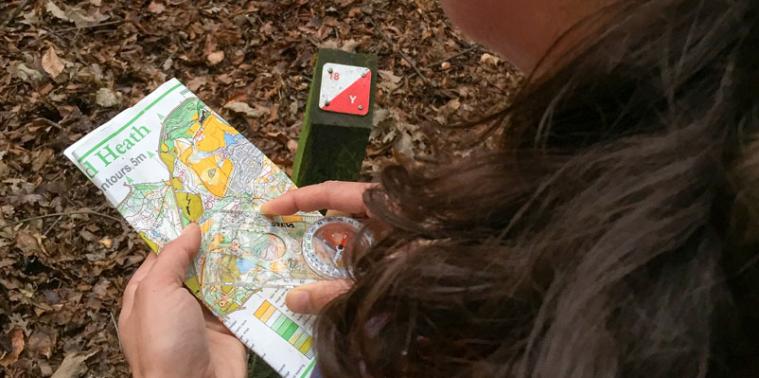
Orienteering is a great test of map reading: estimating the distance you’ve travelled, and ticking off features as you go, so you know what you’re expecting to see as you get near your destination. They’re exactly the same skills you use out walking on the hills. Doing it at a run makes it harder! You also have to decide whether it’s better to take a slightly longer route on a clear path, or attempt to go more directly across rougher ground. I felt like a wildwoman of the woods, skidding down the banks and leaping over fallen trees on our natural obstacle course.
After a few lost minutes looking for our sixth post, we were on a roll, taking it in turns to navigate. At 39 minutes, we knew we needed to get a move on to get back to the finish in time. Legs pumping, hearts racing, we splashed through the puddles and surged our way back to the finish. 43mins 37 seconds. WHOOO!
At an orienteering race you have an electronic timer that gives you a print out of your course, time and score and you can immediately see how well you’ve done compared to other people and chat to other runners about their tactics and the course.
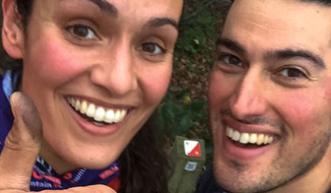
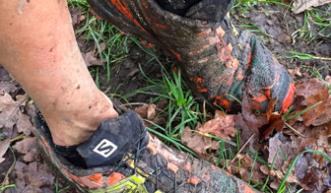
This time, it was just me and Joe. Sweaty, muddy, triumphant. The people on the path still didn’t know what we had been doing. We knew we were winners.
To find your nearest orienteering event or permanent course, visit www.britishorienteering.org.uk/pocs
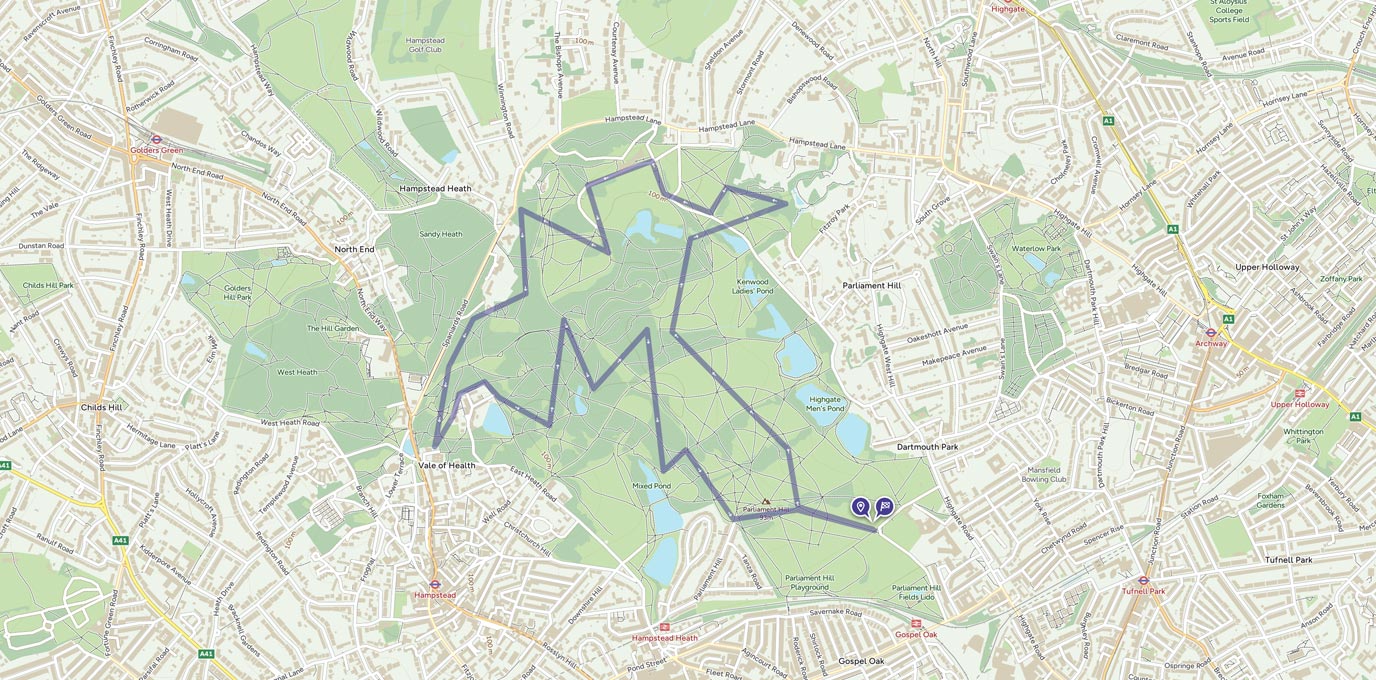
Any distance you like! TQ 280 860
6.7 km / 4 miles